Rate yourself and four friends on emotional stability, generosity, intelligence, creativity and assertiveness. Then ask your spouse and friends to rate you on the same traits. What you discover may surprise you.Find out which traits are you better off getting feedback from others. Are there some traits you know about yourself better than others? Read this to find out.
Saying "All tweets are personal" and "retweets do not imply endorsement" may sound impressive but it does not prevent the reader from assuming that the organization shares the same belief as the employee. So employees are representing your brand 24x7 with their social media presence. They are leaving behind digital footprints of your brand anyway. How can organizations leverage the employees to be brand ambassadors?
Jason Levine is an evangelist for Adobe. His tutorials make it easy for users to learn tips and tricks of the range of products that Adobe has. His tutorials on YouTube unlock mysterious features of different products. He is known to his followers as Adobe Jesus. He makes technical training so cool. Imagine if you had someone like him to evangelize your latest L&D offering. We have no problem when companies spend big bucks marketing a soap that costs fifty rupees. But we shy away from evangelizing our training programs that could make the company stay on the cutting edge.
Last year Alexa created a stir with its novelty factor. Since then voice has become bigger and continues to grow. Google has the advantage of passing on its AI power through all its Android devices. But Alexa has had a two-year head start in the market. Plus, Alexa offers 10,000+ “skills”. Google’s marketing department was the clear winner having plastered Google Now everywhere. But this is the space to watch. My take on why CES 2018 was just lukewarm... not hot.
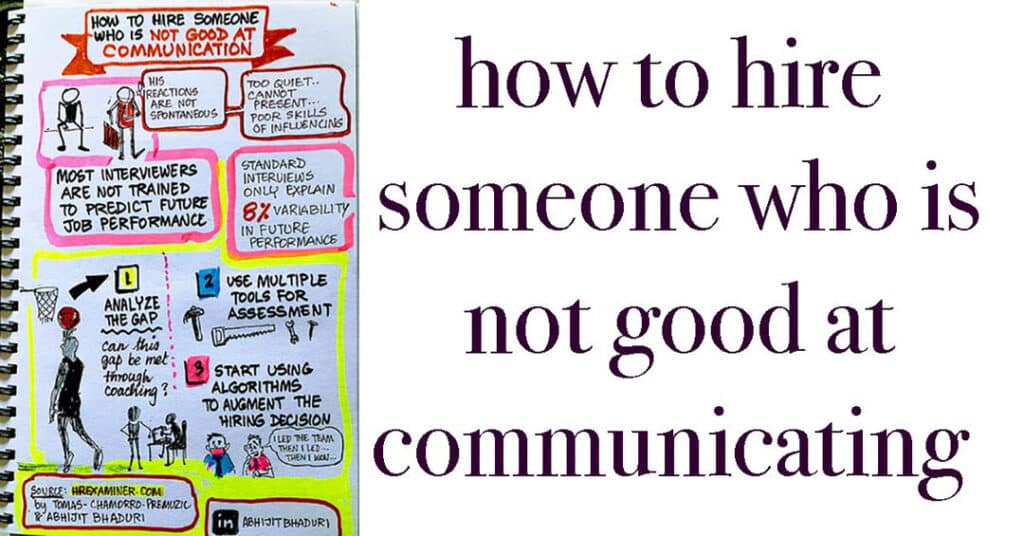
Although most of us spend more time communicating online than offline, recruitment methods are still heavily skewed towards analogue or physical communication skills, particularly the job interview. Indeed, interviews favor those who can communicate their ideas fluently and come across as likable. How can we discover talented people who are not good at communicating but are otherwise terrific at delivering top-notch performance?
When the entire talent pool consists of a few thousand people in the world, the demand and supply equation does get skewed in favor of the experts. In case of Artificial Intelligence, the talent pool is limited to less than 10,000 people across the world. These people are being tapped by everyone from Google, Facebook, Amazon, Apple, Microsoft as well as every other industry. The MD of Daimler Benz recently said their competitors are no longer other car companies like Tesla, but Google, Apple, Amazon etc. The same holds true for talent. If Artificial Intelligence is on its way to becoming like electricity, there are not enough electrical engineers being churned out.
Few topics have captivated talent management discussions more intensely than potential. But how good are we at evaluating human potential? The answer is, it’s mixed. In the real world of work, organizational practices lag behind, with 40% of designated “HiPos” — high-potential employees — not doing well in the future and at least one in two leaders disappointing, derailing, or failing to drive high levels of engagement and team performance. Despite the tools being available, political processes derail how talent is identified in organizations.
What makes someone an effective hire then boils down to three characteristics. Do they have the knowledge to do the job? Are they motivated to work hard? Do they have social skills that will make it easy for them to work with others?How can we assess for these during the hiring process?
Business education seems to leave gaps in skills that demand human interaction and working across geographies and diverse groups. The entrance examination of a B-School is such that it is hard for a non-engineer to compete. Hardly any Humanities graduates can make it past the entrance examination that is tilted in favor of quantitative skills.It is no surprise that many of us struggle in the workplace to influence colleagues who do not report to us. Or to work with the matrix structures where power lines are fuzzy and influence lines matter.This is just what Humanities teach us. How to interact with human beings. To deal with ambiguity and fuzziness.