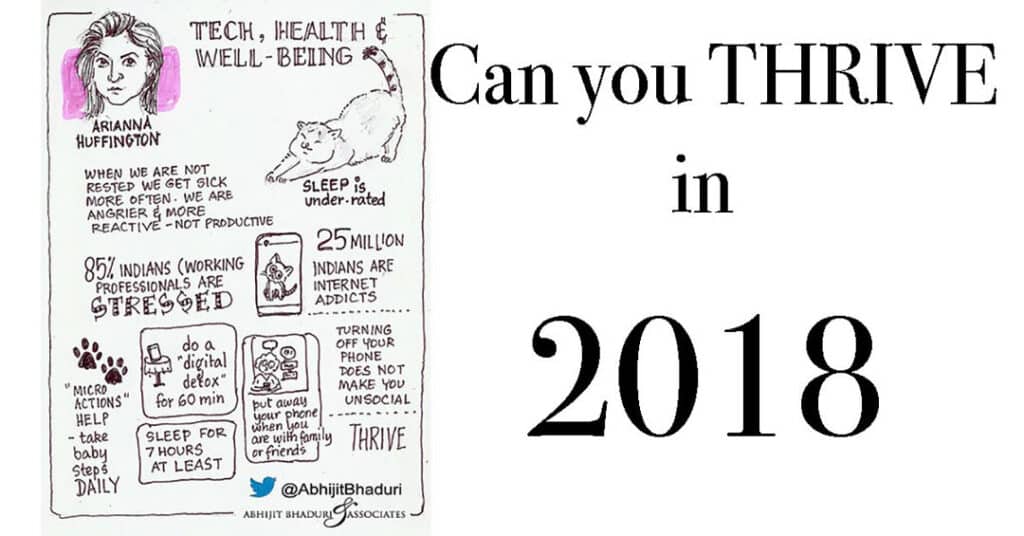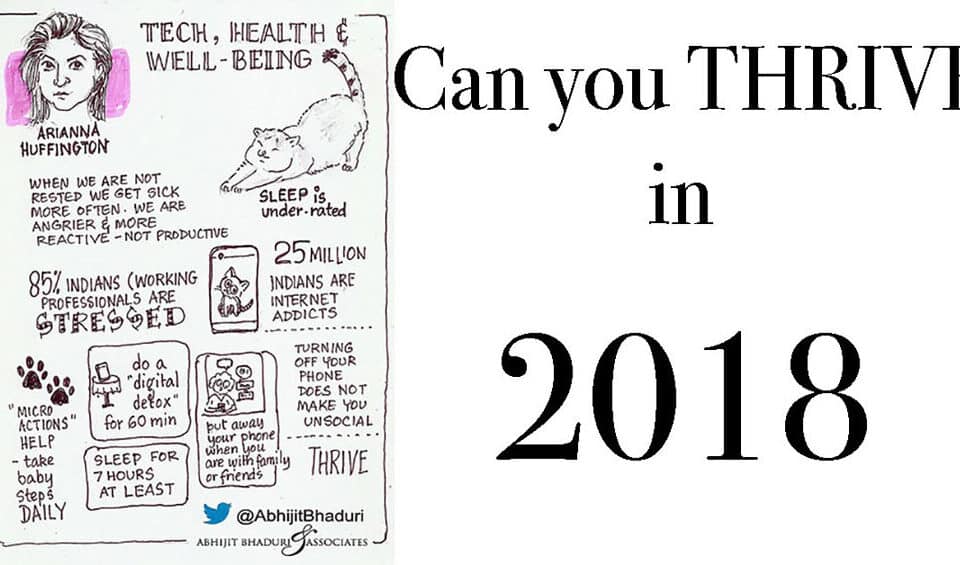
In 2016 I made resolutions that would help me improve my storytelling skills. Innovations that get implemented and go viral are the ones that have stories that capture our imagination. Ideas travel faster when they ride on the wings of stories. Here’s what I resolved to do:a) Take notes when innovators and entrepreneurs tell their storiesb) Improve my visual storytelling skills by drawing something every dayc) Listen to podcasts of storytellers & screen writersThis year I turned to Arianna Huffington's philosophy of how to thrive. I am going to adopt some of them.
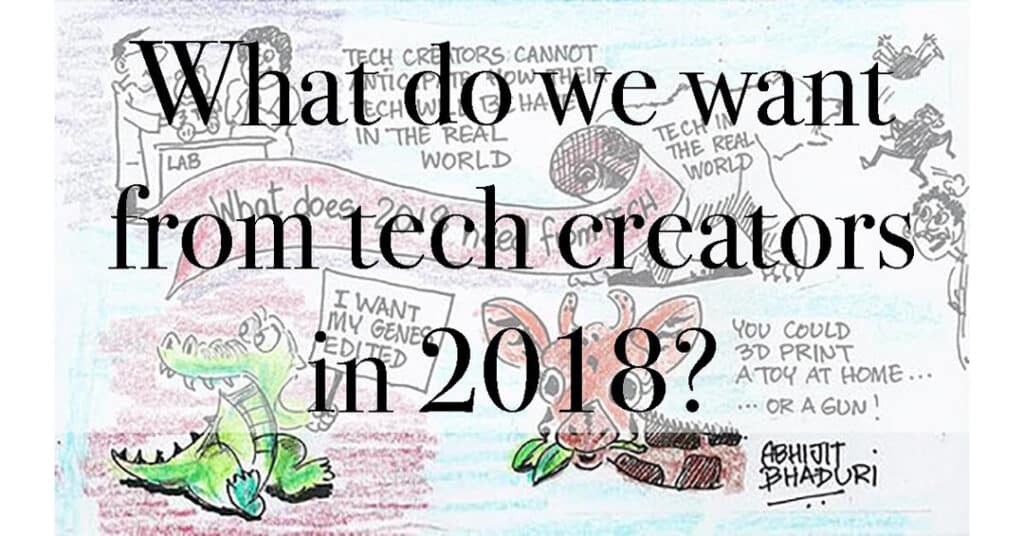
Tech 2018 must pause and look at its impact - not from the lens of Silicon Valley but from the eyes of the third world. The creators of the technology must be held accountable for the damage they can unleash. There is no doubt that tech improves our lives immensely. Yet, there is no escaping the rising inequalities that tech automatically creates. The value of bitcoins has been rising. Whether it is a bubble or just a new form of banking is still being debated.
The new products and service will create new roles and new work opportunities. But they will need people to learn new skills. While talent is fairly uniformly distributed, opportunities are not. The impact of job redundancies impacts people at the bottom of the pyramid far more sharply than those who are well cushioned. Where do we begin to prepare ourselves for the future? Education is a good place to start. This time, education will have to be far more than a way to land a job. It has to prepare us to think of others and not just ourselves. The future of work has to be designed not just as a tech solution but also as an ethical choice.
According to a new research by Harvard Business School professors Alison Wood Brooks, Karen Huang, Michael Yeomans, Julia Minson, and Francesca Gino, people who ask follow-up questions are perceived as higher in responsiveness, an interpersonal construct that captures listening, understanding, validation, and care. Here are 9 follow-up questions you can ask.
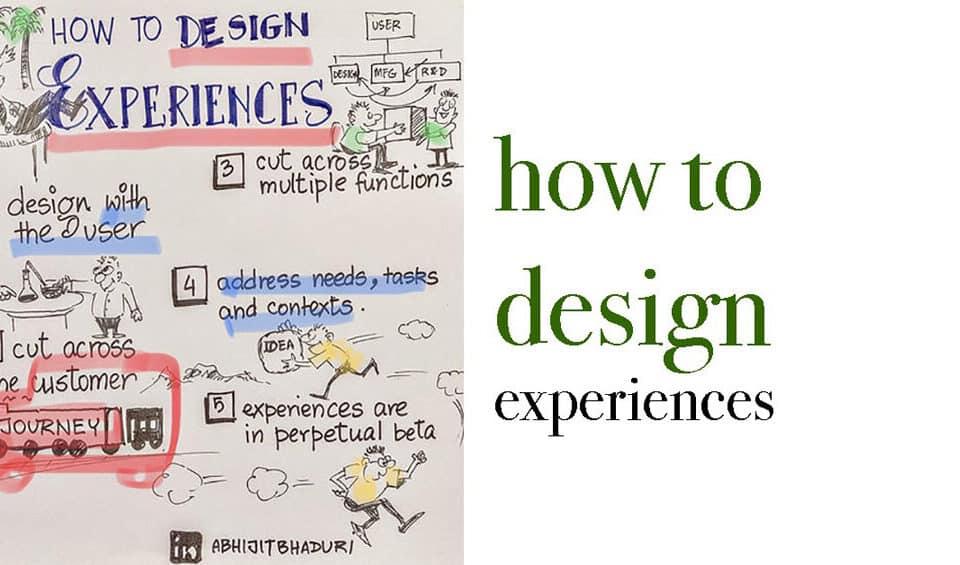
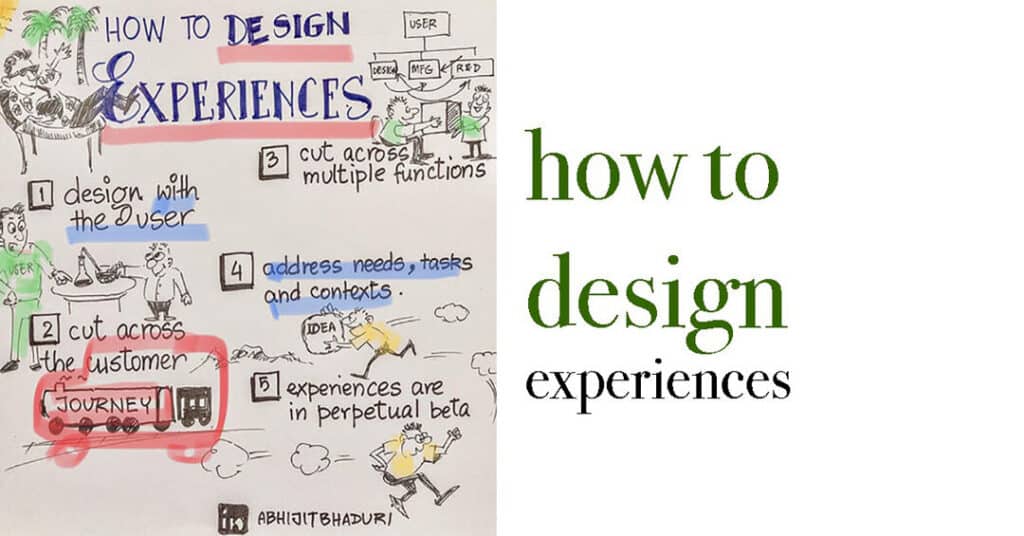
Designers need to design with empathy. That means giving up one’s prior knowledge of the subject and looking at it with the eyes of a novice to understand the feelings of a user. This is easier said than done. Observing people in their natural surroundings is a good starting point. But don’t do it like a tourist. Instead immerse yourself in that world.
The pattern is clear about data breaches. The hackers sneak in to the databases. Since they are in stealth mode, their presence is not detected for months. Could it be that your employees’ data has been compromised and you are blissfully unaware?
The New York Times ran a study on the jobs we are most likely to inherit from the mother or father. In their study they found that males are 2.7 times likely to share dad’s profession. Males are two times likely to share their mother’s profession. Daughters are 1.8 times likely to follow dad and 1.7 times likely to follow their mother. Parents certainly shape our view of work. It is no surprise that the children of parents who were unemployed are more likely to be unsure of the profession they would choose.
Hackathon are not about tweaks. They are all about exponential thinking. This is about taking a moonshot within 36 hours or so. The teams get down to building prototypes and speed-coding. It is best if they can create a working prototype in 36 hours. That too about a goal that is crazily tempting simply because of the impact that it could have. And then again... it might fail. So what. Hackathons are not for the faint-hearted. It is race to complete an impossible task.