
THE Tale, the Parable, and the Fable are all common and popular modes of conveying instruction. The Tale is a story either founded on facts, or sometimes just a figment of imagination. There are no moral lessons expected to be learned. The Parable is intended to convey secret meanings. Fables are intended to impact human behavior through the stories and the characters. Good and bad characters are clearly demarcated. Aesops fables have become a part of our everyday language. The story of the thirsty crow dropping pebbles in a pitcher to raise up the level of water is one of the first lessons in innovation we learned. The moral of the story is explicitly stated at the end eg "Necessity is the mother of invention" in case of the Crow and the Pitcher story.

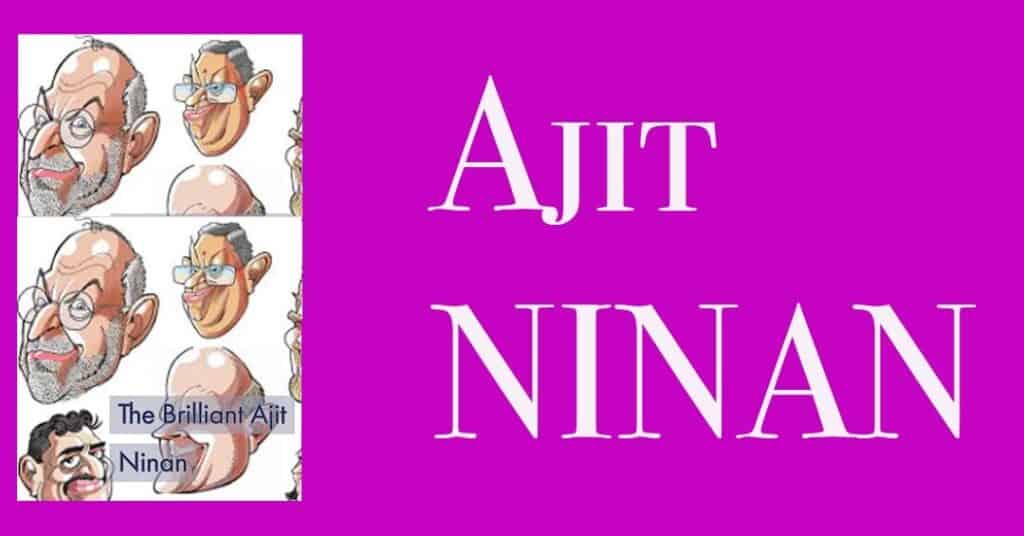
The morning newspaper and a cuppa chai is a ritual that is common to a large part of the human race. But people read it in their own manner. Some glance at the headlines and head straight for the sports page. So open the editorial page and shake their head disapprovingly at the affairs of the world. I head for the cartoons. I grab the newspaper and head straight for Ajit Ninan's cartoon. I look for two elements of wit in a cartoon - the visual and verbal. Ninan excels in both. Usually one lands up choosing between the two. Ajit worked for many years with the India Today group as cartoonist and illustrator, before moving to the Indian Express newspaper in 1992 eventually switching to Outlook one of India's top news magazines. He is now with The Times of India as their Chief Graphics Consultant. Ajit used to run a cartoon strip called Detective Moochhwala (and his tail-less dog called Poochh, which means tail in Hindi) for the childrens magazine Target. That comic strip had cult status amongst readers and it was amazing to see Ajit pack in a tight storyline and brilliant graphics in about 35-40 frames.