
LEGO nearly went bankrupt chasing trends. A boy’s wrecked sneakers saved them — and the lesson changes everything we think we know about employee engagement strategy.

In the early 2000s, LEGO was hemorrhaging money. Not because children stopped playing. Because LEGO’s leaders believed a story about children that turned out to be spectacularly wrong. The story went: kids have short attention spans, the digital age is killing physical play, diversify or die. So LEGO launched toothbrushes. Clothing. Theme parks. They nearly went bankrupt doing it.
The data told them what kids were doing less of.
Nobody Asked Why Kids Play
So LEGO did something most panicking corporations never do: they slowed down. They sent researchers into real homes — messy ones — and watched children for six months. Not to sell them anything. To understand them.
In Germany, a researcher asked a boy what his most prized possession was.
The boy held up a pair of sneakers. Wrecked. Scuffed. The canvas worn through in one very specific place — a groove carved by a single repeated motion. A data scientist would have seen trash.
The researcher asked: Why do you love these?
The boy said: Because you can see how good I’ve gotten.
Those wear marks weren’t damage. They were a record. Every groove was a kickflip attempted, failed, adjusted, tried again. The sneakers were a physical diary of mastery at work — proof that he had crossed the line from can’t to can. He didn’t love the sneakers. He loved who he had become while wearing them.

Why kids play – the secret revealed
That boy wasn’t unusual. He was universal.
The researcher asked: Why do you love these?
The boy said: Because you can see how good I’ve gotten.
LEGO’s researchers discovered that children aren’t looking for easy, instant, or entertaining. They’re chasing three things with ferocious obsession.
Mastery
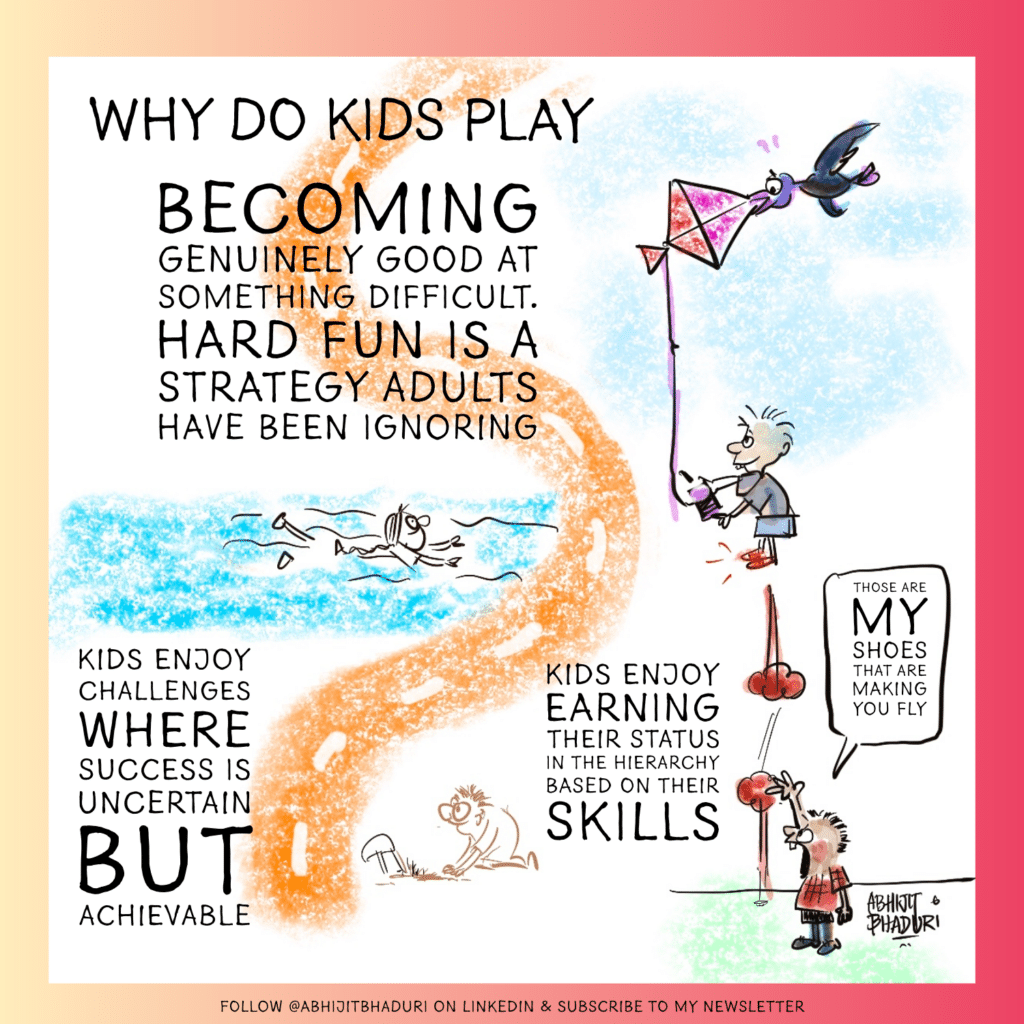
The deep satisfaction of becoming genuinely good at means you can tell yourself: I can do this now, and yesterday I couldn’t. The skater who sticks a trick after a hundred falls. The kid who can name every match in the Premier League finals is chasing mastery of something. The sensation is almost physical.
Hierarchy
We tend to sometimes see hierarchy as evil. The kids love being at the top of the skills pyramid. Children are acutely aware of where they stand relative to their friends, and they want that rank to be earned through skill. This isn’t cruelty. It’s motivation. It drives them to improve so they can move up. It’s intrinsic motivation doing exactly what it was designed to do.
Challenge
The difficulty level has to be just right – not too easy, not impossible. The precise zone where success is uncertain but achievable. Where you’re slightly over your head and there’s something real to figure out.
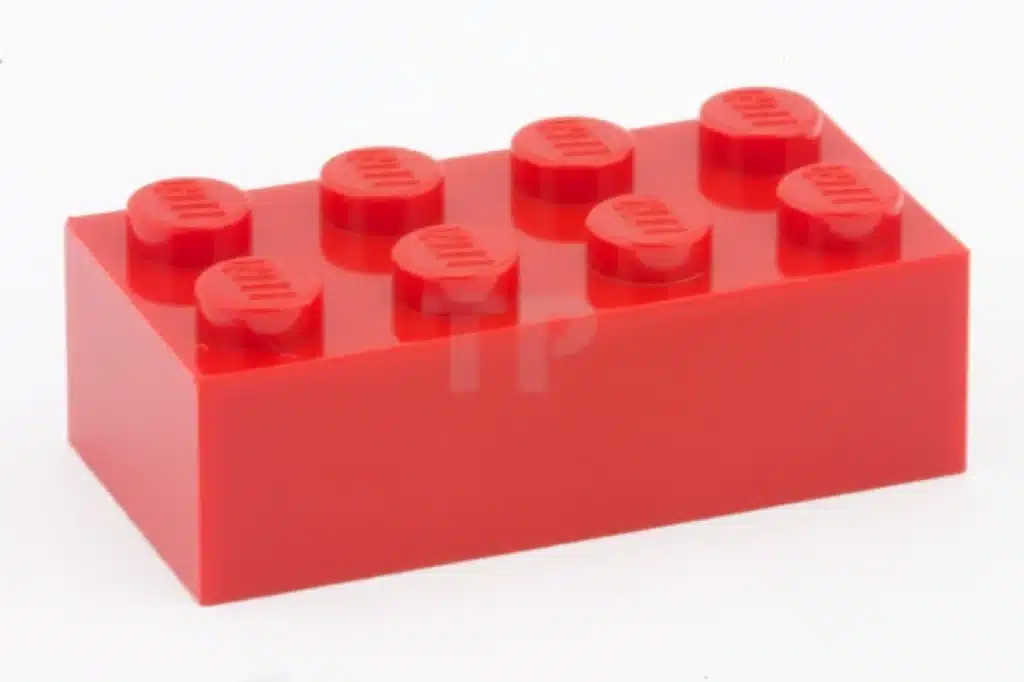
The Humble Brick Was Actually a Genius Machine
LEGO’s brick, that simple six-stud plastic piece was a perfect engine for all three. It rewarded mastery visibly. It created hierarchy (some kids built better, and everyone knew it). It offered challenge with no ceiling — anyone could start, but complexity had no limit.
LEGO hadn’t failed because the product was wrong. They’d failed because they’d forgotten what the product was for.They went back to the brick. Today they’re the most profitable toy company on earth.
“What Makes Someone Want To Get Better Here?“
Here’s where it gets uncomfortable. Why do humans engage deeply with anything? This applies directly to your workplace. If you wondered ever, why employees disengage, or how to improve employee motivation or what drives performance at work, then this research on watching kids play is powerful.
And the answer is identical. Mastery. Hierarchy. Challenge.
People stay where they can get visibly better at something that matters. They need to know where they stand, not to feel superior, but to feel real. And they need work that sits in that precious zone: hard enough to require genuine effort, achievable enough to reward it.What makes employees stay? What makes them try harder than the job requires? What turns a role into something a person would do even if nobody was watching?
The answer has been sitting in behavioral science for decades. Edward Deci and Richard Ryan spent forty years studying human motivation and found that people thrive when three conditions are met: they feel competent, autonomous, and connected to something meaningful. They called it Self-Determination Theory. LEGO, without knowing it, built an entire product around it.
Hard fun at work is that theory made physical. Not a perk. Not a culture initiative. The oldest, most reliable engine of intrinsic motivation in the workplace, and the extraordinary news is that every organisation already has everything it needs to build it.
How do you improve employee engagement when nothing seems to work? Mihaly Csikszentmihalyi found that people enter a state of total absorption, what he called flow, precisely when challenge and skill are perfectly matched. Design for that zone and engagement stops being a problem you solve and starts being a condition that emerges naturally.
How do you retain top talent in 2025? Give people wear marks worth showing. Teresa Amabile at Harvard found that progress, even small daily progress, is the single most powerful driver of positive emotion at work. People do not leave places where they are visibly growing.
The boy with the sneakers already knew all of this. He just could not name it.
Now you can. And that changes everything. So LeGo of your old assumptions.
Watch this video to learn about the Lego experiment.
2 Comments
How beautifully told. Learning brick by brick.
You may be just another brick in the wall. But no two bricks look the same. Every brick has its story to tell. In the hands of the mason each brick is flipped around to be placed perfectly so that every corner matches and locks with the next. The end result for us is just another brick wall. But for the mason, every edge, niche, cranny and crevice tells him how well the job has been done.
Sorry if I have strayed from your thought process. I just found the metaphor hard to ignore.
Thanks, AB, for the lovely piece that again reminds us to ask the right questions.
When you at any task from the lens of a master craftsman, the task gets redefined. That is why the master craftsman may go back to touch up a part of the painting that looks complete to the novice.