
AI promised to give us time back. Instead, it is changing how time feels. And that changes everything about how we work, learn, and decide.

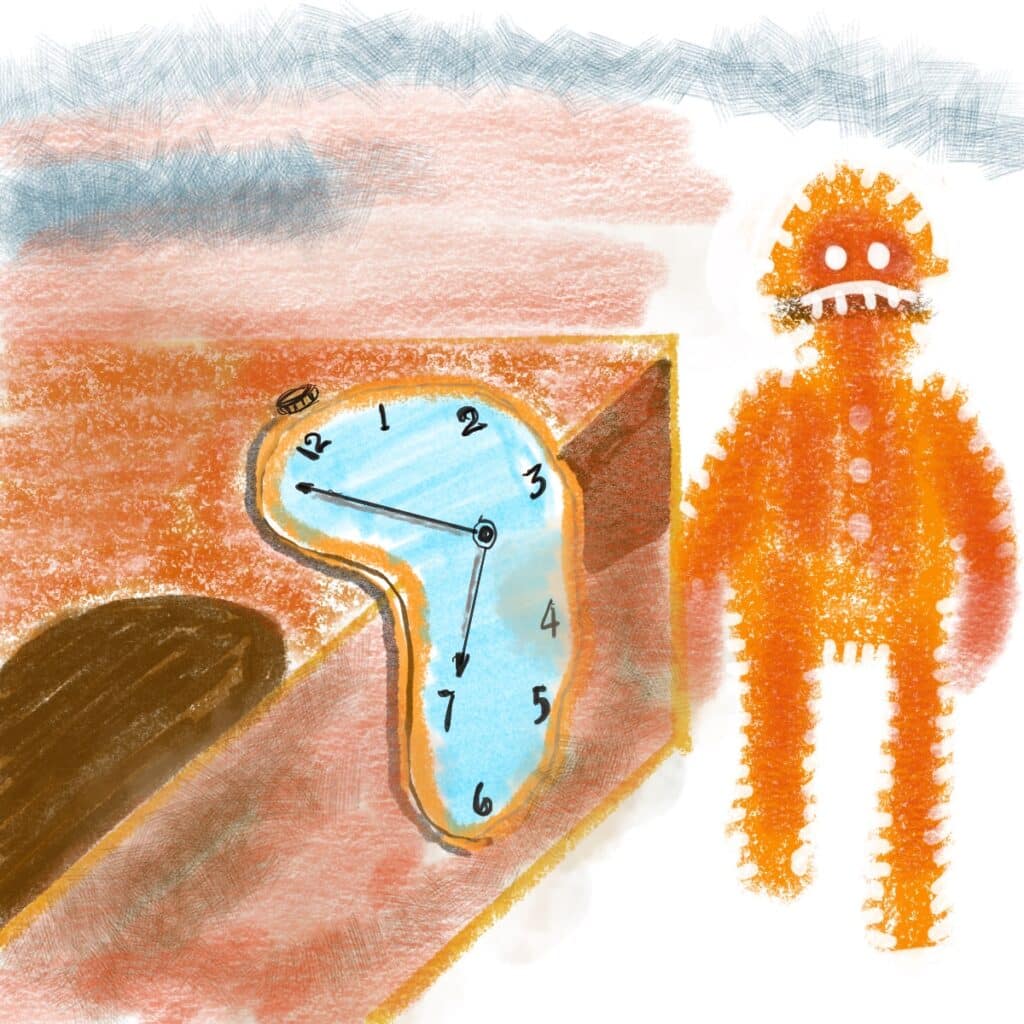
In 1931, Salvador Dalí painted three clocks melting across a barren landscape. He called it The Persistence of Memory. The clocks had not stopped. They had softened. Time was still passing, but it no longer behaved the way you expected it to.
Dalí claimed the idea came to him while staring at a piece of Camembert cheese dissolving in the sun. But what he painted was something deeper than melting dairy. He painted something every professional in the AI economy now feels in their bones: time is not a fixed thing. It bends. It stretches. It warps depending on what you are feeling while it passes.
We need to talk about that warping. Because it is quietly destroying how people make career decisions, how leaders manage transitions, and how organisations think about the future of their workforce.

AI Was Supposed to Give Us Time. So Where Did It Go?
The sales pitch of artificial intelligence is simple. AI handles the drudgery. You get the hours back. You spend those hours on creative thinking, strategic work, the stuff that makes you human.
It is a beautiful promise. And for some tasks, it is true. What used to take a research analyst four hours now takes forty minutes. What used to take a copywriter a full day now takes a morning.
But here is what nobody warned us about. The time AI gives back does not feel like a gift. It feels like a vacuum. And into that vacuum rushes something far more exhausting than the drudgery ever was: the question of what you are supposed to do now. What you are supposed to become. Whether the thing you spent ten years getting good at still matters.
Oliver Burkeman, in his book Four Thousand Weeks, calculated that the average human lifespan is roughly four thousand weeks. His argument was not about productivity. It was about finitude. You will never have enough time to do everything, so the real skill is choosing what to neglect. The AI economy has taken that already difficult problem and set it on fire. It is not just that you must choose what to do with your four thousand weeks. It is that the options are multiplying faster than you can evaluate them, the shelf life of each option is shrinking, and the ground beneath every choice is moving.
That is the melting clock. Time has not stopped. But it has changed shape. And five forces are doing the melting.
The Watched Pot That Never Boils
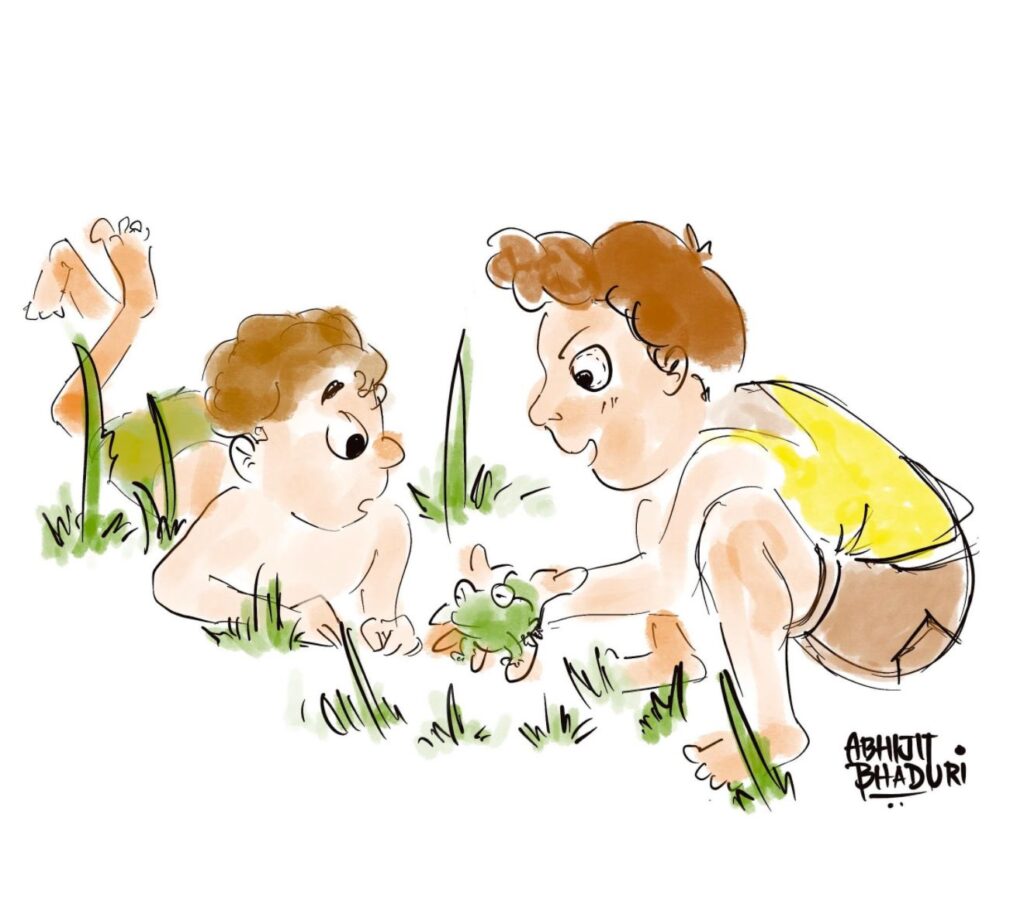
Attention stretches time. The more closely you monitor an interval, the longer it feels.
You know this already. You have watched a pot of water and waited for it to boil. You have sat in a waiting room staring at the clock, and the minute hand has barely moved. The moment you stop watching, time accelerates. The moment you start watching again, it crawls.
Now think about what AI has done to workplace attention. When your role feels uncertain, you do not relax into your work. You monitor. You scan messages for signals. You read every restructuring announcement twice. You compare your output to what an AI tool just produced in thirty seconds. Then you worry.
That hypervigilance does not just feel exhausting. It makes every week feel longer and heavier than it actually is. You are not imagining that this year has felt like three. Your attention has stretched it.
The Flight With No Departure Time
Uncertainty stretches time. A 2010 study in Psychological Science found that uncertain waits are reliably perceived as longer than certain ones of identical duration. When a flight is delayed but you can see a countdown, you settle in. When a flight is delayed with no information, the same thirty minutes feels like an hour.
The AI economy has created the longest uncertain delay in modern professional life. There is no countdown. No one can tell you when the disruption will peak. No one can tell you which skills will matter in three years. No one can tell you whether your role will exist, evolve, or dissolve.
You are sitting at the gate, watching the board, and the board says nothing.
That uncertainty is not just uncomfortable. It is distorting your perception of how long things take. Learning a new skill in this environment feels slower than it actually is, because every hour of study is wrapped in the question of whether it will still be relevant by the time you finish.
Robert Sapolsky explains why we get stressed
Why Every Layoff Announcement Makes the Year Feel Longer
Threat dilates time. Research confirms that people in threatening or high-stress states systematically overestimate how much time has passed. An hour under threat feels longer than an hour at rest. This is not weakness. It is neuroscience. Your brain, sensing danger, slows down its internal clock to give you more processing time to respond. The problem is that the AI economy keeps your threat system gently activated all the time.
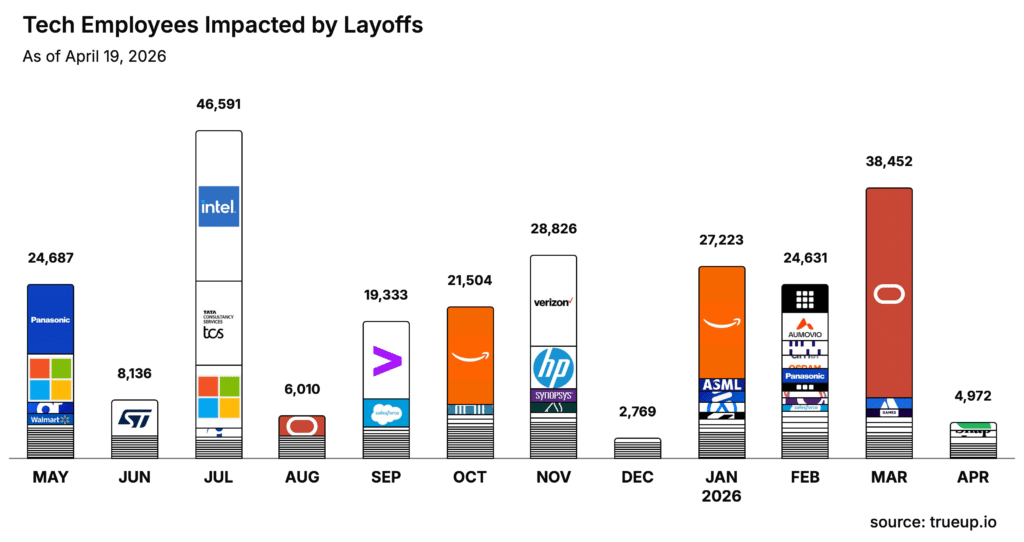
Every article about skills becoming obsolete. Every team message about a new AI tool replacing a workflow. Every quarterly earnings call where a CEO mentions headcount efficiency. None of these is a single shock. Together, they are a low-grade, continuous signal that keeps the threat system humming.
And when your threat system is humming, the time required to master anything new feels impossibly long. Not because it is. But because threat is stretching every hour like taffy.
Why the First Year of AI Felt Like a Decade and the Second Disappeared
Novelty slows time in the moment and then compresses it in memory. When you encounter something genuinely new, your brain lays down richer, more detailed memories. That is why your first week at a new job feels like a month, and your fifth year feels like a weekend.
This is exactly what happened with AI. The first year of widespread disruption, 2023 into 2024, felt enormous. Every week brought a new tool, a new capability, a new reason to rethink your assumptions. Your brain gave that year its full photographic attention.
Then familiarity set in. The tools became routine. The conversations became repetitive. And the second year vanished. Not because less happened, but because your brain stopped treating it as new. Memory compression kicked in and swallowed the months whole.
This creates a dangerous illusion. Leaders look back and think the pace of change has slowed. It has not. Their brains have simply stopped photographing it.
The Reinvention Tax That Nobody Talks About
Age compresses time proportionally. For a five-year-old, one year is twenty percent of everything they have ever lived. For a fifty-year-old, it is two percent. This is not nostalgia. It is mathematics.
When an organisation tells a forty-five-year-old professional to reinvent themselves every two to three years because that is the current half-life of a skill, those two to three years feel considerably shorter to them than they would to a twenty-five-year-old. The same reinvention deadline, experienced as a very different amount of time.
A twenty-five-year-old hearing “you need to reskill in two years” hears a generous runway. A fifty-year-old hearing the same sentence hears a starting gun they are already behind. The deadline is identical. The felt experience is not. And no corporate learning programme adjusts for this.
So What Do We Do With Melting Clocks?
Dalí did not paint his melting clocks as a warning. He painted them as a recognition. Time is not what we pretend it is. It is not the rigid, mechanical thing on your wrist. It is soft. It bends under the weight of your attention, your uncertainty, your fear, and your age.
The AI economy has not stolen your time. It has changed the shape of it. And until we acknowledge that, we will keep designing career advice, learning programmes, and workforce strategies as if every professional experiences the same twenty-four hours in the same way.
They do not. The watched pot is boiling at different speeds for every person in your organisation. The question is whether you are leading as if you know that.
What is the one thing about your experience of time at work that has changed most since AI arrived? I would genuinely like to know.