
Humanoid robots are redefining workplace augmentation by taking over physical strain while amplifying human creativity and judgment. The real opportunity lies in human-robot collaboration that increases satisfaction, not redundancy.
What if robots are not here to replace effort but to remove the parts of work that quietly exhaust people?
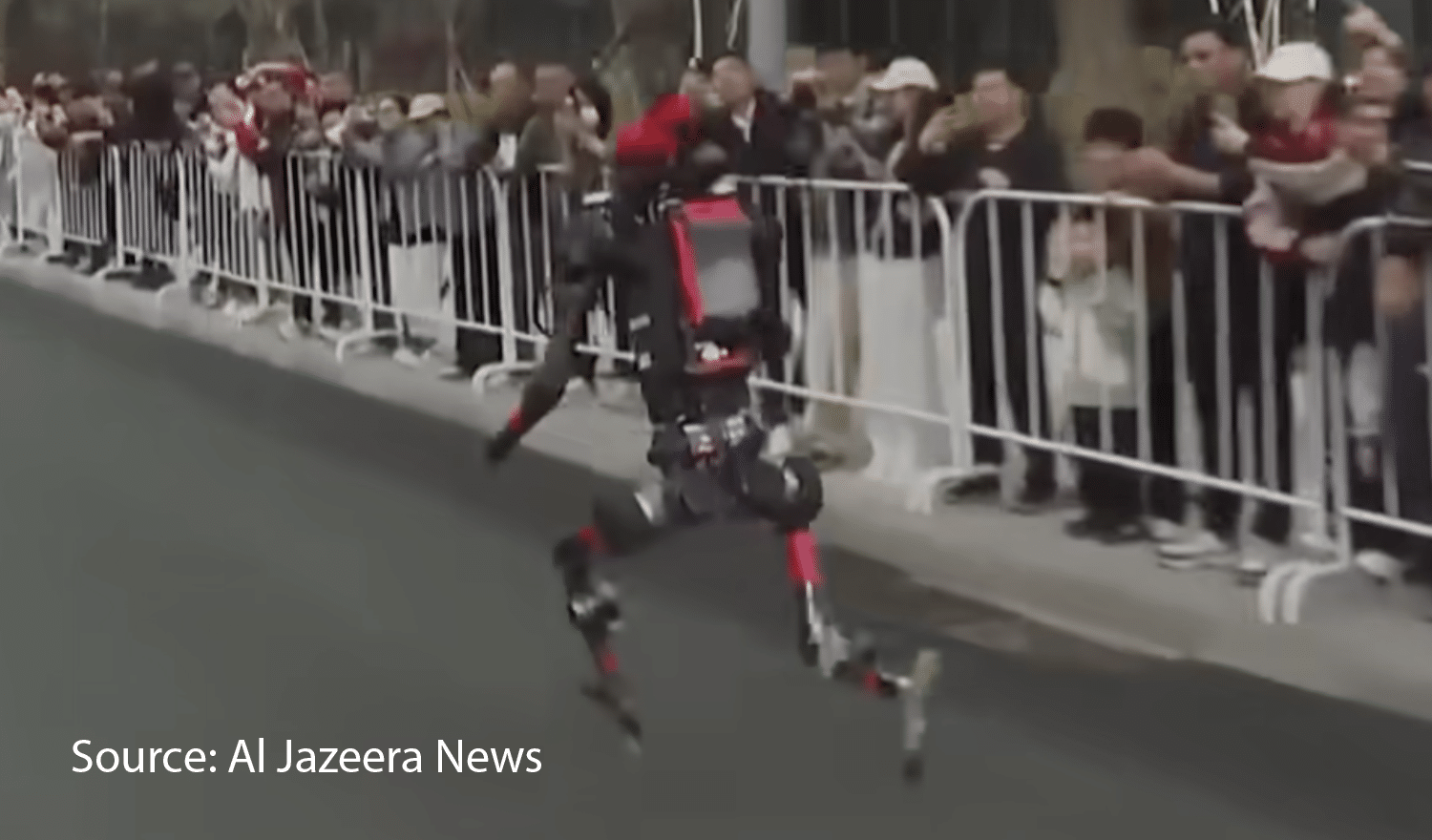
A fast humanoid robot outrunning humans makes for a striking headline. But speed alone is not the story. Work satisfaction rarely comes from moving faster. It comes from having control over what you do, feeling good at it, and doing something that matters. This is where humanoid robots, human-robot collaboration, and workplace augmentation begin to change the conversation.
Start with a simple idea. Robots are good at repetition, endurance, and precision. Humans are good at judgment, empathy, and improvisation. The real opportunity sits in combining these strengths rather than swapping one for the other. When designed well, robots remove friction while humans move closer to meaningful work.
In the United States, this shows up as a response to burnout. Many jobs demand constant switching between physical and cognitive tasks. Nurses walk miles in a shift. Warehouse workers handle repetitive picking under time pressure. Robots that move quickly across spaces can take over the running around. This gives humans more time for care, decision making, and problem solving. Office environments can also benefit. Small interruptions that break focus can be handled by machines, allowing people to stay in deeper thinking modes. Over time, this shifts value from effort to insight.
In India, the opportunity is different. The focus is on dignity and upward mobility. Many roles involve physical strain with limited growth pathways. Fast robots can take on hazardous or exhausting tasks such as sanitation or heavy logistics. The human role can then evolve into supervision, maintenance, and optimization. In schools, robots can handle administrative movement and coordination so teachers spend more time teaching. In homes, simple robotic assistance can reduce invisible labor, especially for homemakers. The key is framing. When robots are seen as tools for progress, adoption becomes easier and more meaningful.
In Europe, the emphasis is on quality of life and precision. Aging populations need support without losing independence. Robots that assist with mobility, errands, and daily tasks can extend autonomy for older adults. In skilled trades, repetitive preparation work can be automated while artisans focus on craft. Urban logistics can become quieter and more efficient with robotic support. Here, the value is not speed alone but better living standards and preservation of expertise.
Workplace augmentation works best when robots handle the predictable and humans handle the unpredictable.
Across all regions, a consistent pattern emerges. Workplace augmentation works best when robots handle the predictable and humans handle the unpredictable. In education, teachers focus on engagement while machines manage logistics. In sports, robots can pace athletes and improve training quality while coaches guide strategy. In emergency response, robots can enter high-risk zones first, reducing danger for humans.
There are second-order effects to consider. In the short term, people feel relief from physical strain. In the medium term, roles evolve toward higher judgment and coordination. In the long term, new professions emerge around managing human-machine systems. There are also risks. Poor design can reduce skill depth or create dependency. Status concerns can arise if speed is misinterpreted as superiority. These outcomes depend on how choices are structured.
For leaders, the practical approach is clear. Identify where work feels draining rather than challenging. Introduce robots as assistants, not replacements. Redesign roles immediately so people move toward higher value tasks. Signal that working with machines is a mark of capability. Measure satisfaction alongside efficiency.
The deeper shift is not about machines becoming faster. It is about humans becoming more focused on what only they can do.