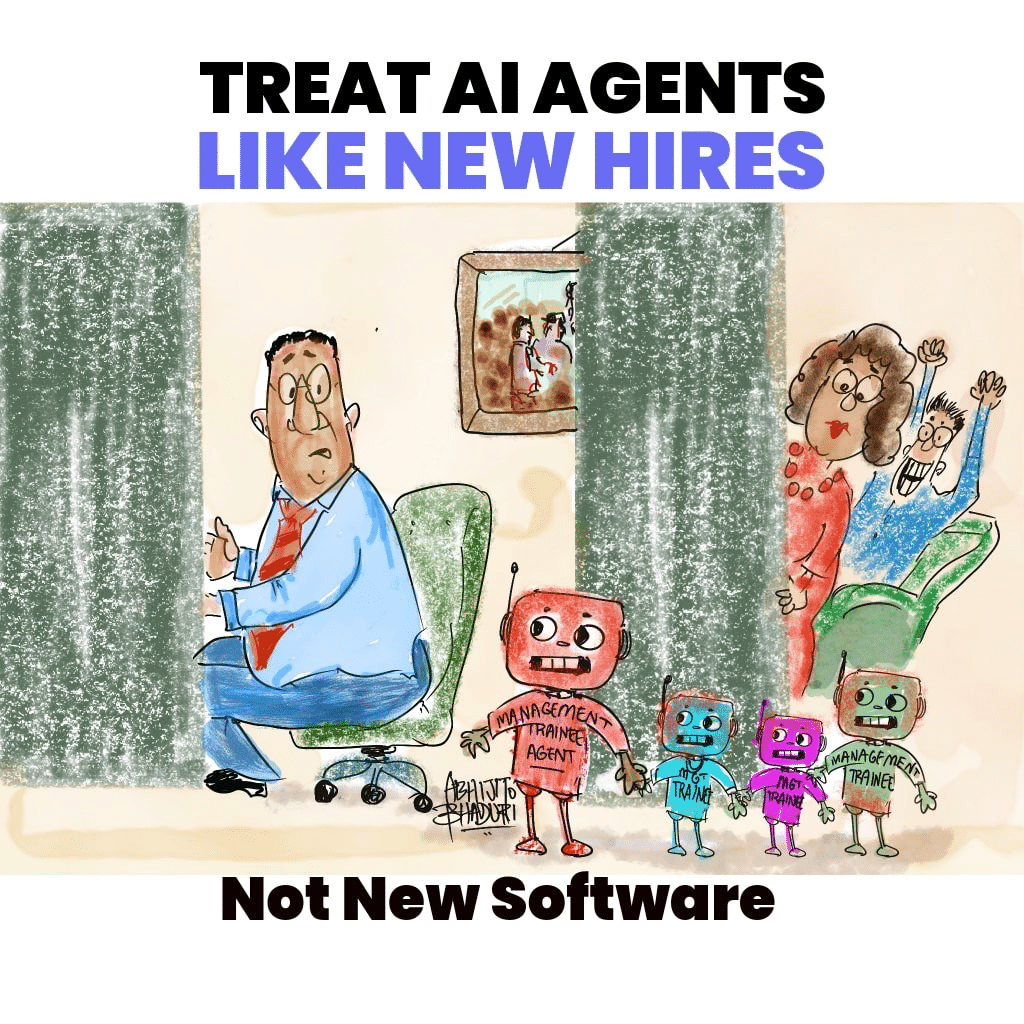
Military drones can now collect vast amounts of information, interpret what they see, identify objects and, when communication with humans is disrupted, continue operating with increasing autonomy. The organizations are also grappling with the shrinking gap between seeing, deciding and acting time.
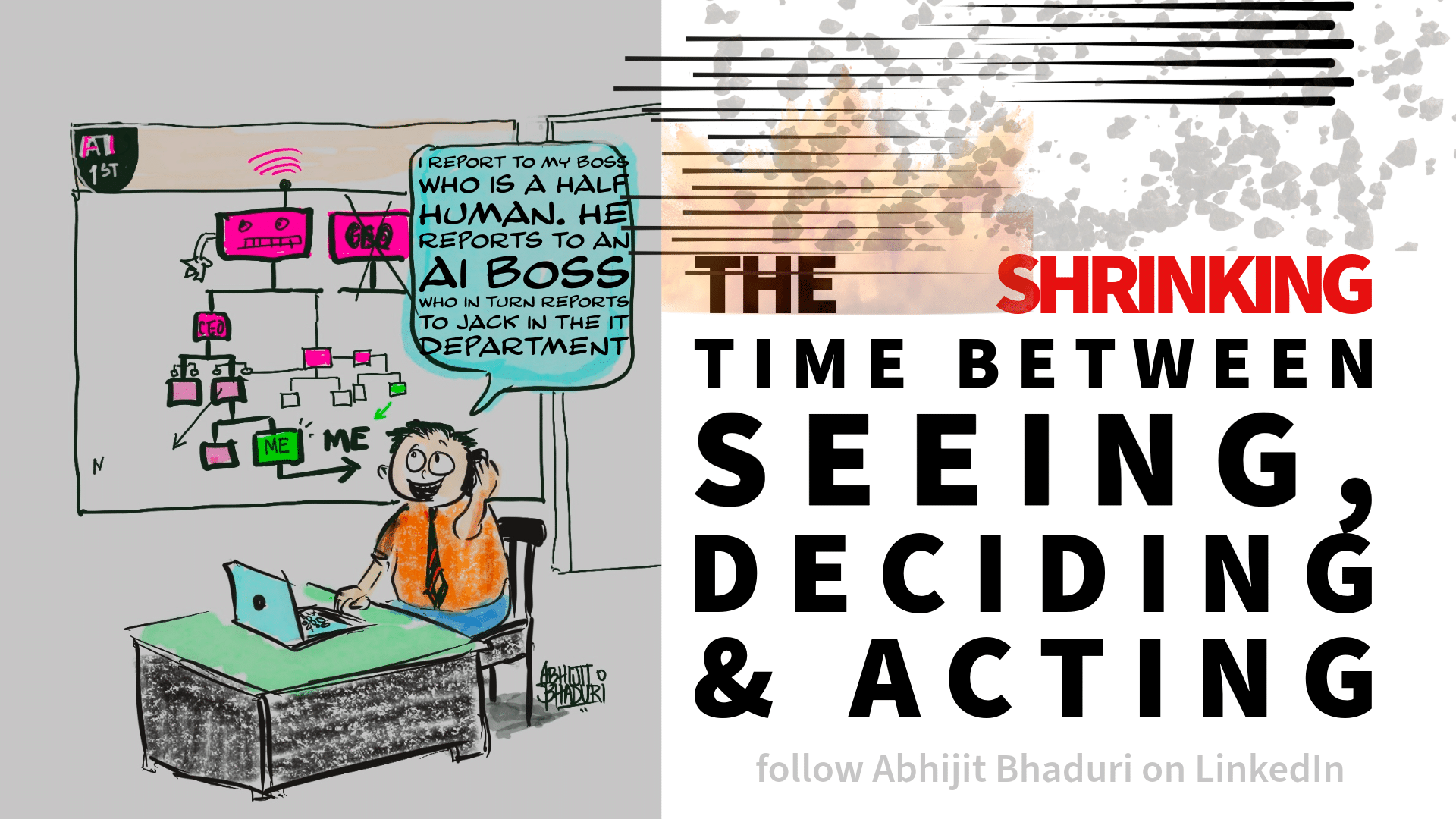
On the battlefront the machines are getting faster at analyzing vast data streams from drones, satellites, signals and reports. That involves the challenges of computer vision. To differentiate between military uniforms, vehicles, weapons and what belongs to the civilians. AI is generating the target and the officers have between 15-20 seconds to assess if the target must be destroyed.
Simultaneously, the distance between seeing, deciding and acting is collapsing. Today AI can autonomously select, engage and destroy targets WITHOUT a human in the loop.
Business is heading in the same direction.
A customer-service system can detect an angry customer, determine the likely problem and recommend a response. A fraud system can spot an unusual transaction and block it. A cybersecurity system can identify an attack and isolate a device. A recruiting system can screen thousands of applications and recommend candidates. A manufacturing system can detect a defect and trigger corrective action.
AI is moving from being a tool that helps people do work to a system that increasingly participates in deciding what work should happen next.
Different levels of risk
We have been asking, “Where should we use AI?” A better question to ask is, “How much authority should AI have?“
- First, AI observes. It finds patterns, summarizes information and surfaces anomalies.
- Then AI recommends. It suggests what a person should do.
- Finally, AI acts. It takes action without waiting for a human every time.
These are fundamentally different levels of organizational risk.
Having AI summarize a customer call is one thing. Allowing it to decide whether a customer receives compensation is another. Using AI to identify a manufacturing defect is different from allowing it to shut down an entire production line.
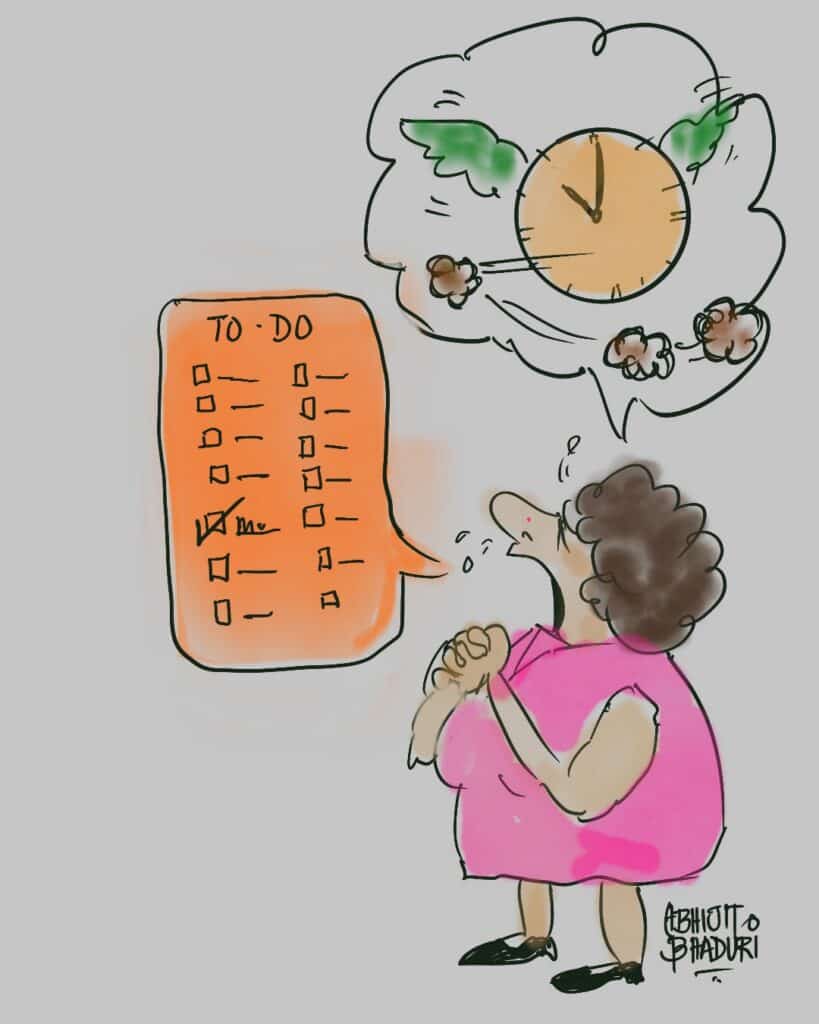
Don’t treat all AI adoption as one technology decision. It is really a decision-rights choice. When time available to decide shrinks we are expecting the decision-fatigue of the human to overrule an increasingly confident AI recommendation
Don’t Roll AI Out by the Org Chart
Companies often ask whether they should start with customer-facing functions, employee-facing functions or manufacturing.
I would frame the choice differently.
Don’t introduce AI according to the organization chart. Introduce it according to the consequences of the decision.
Start with work where the benefits are visible, the data is reasonably reliable and mistakes are relatively easy to reverse. Research, drafting, knowledge retrieval, meeting summaries, software assistance and analysis are obvious examples.
Then move toward decisions where AI can recommend an action but a person reviews it: customer-service recommendations, sales forecasting, quality inspection, fraud detection and workforce analytics.
Only with sufficient experience should organizations move toward decisions where an error can seriously affect a person, a customer, the company’s reputation or physical safety.
This creates a simple principle:
The higher the consequence and the harder the decision is to reverse, the stronger the human oversight should be.
The Autopilot Paradox: Less Practice, Less Judgment
When machines take over routine decisions, humans get fewer opportunities to practice making those decisions themselves.
A pilot who spends most of the flight on autopilot may be less practiced when something goes wrong. A financial analyst who stops building models may become less capable of spotting when the model is wrong. A manager who relies entirely on an algorithm’s recommendation may gradually lose the ability to make a nuanced talent decision.
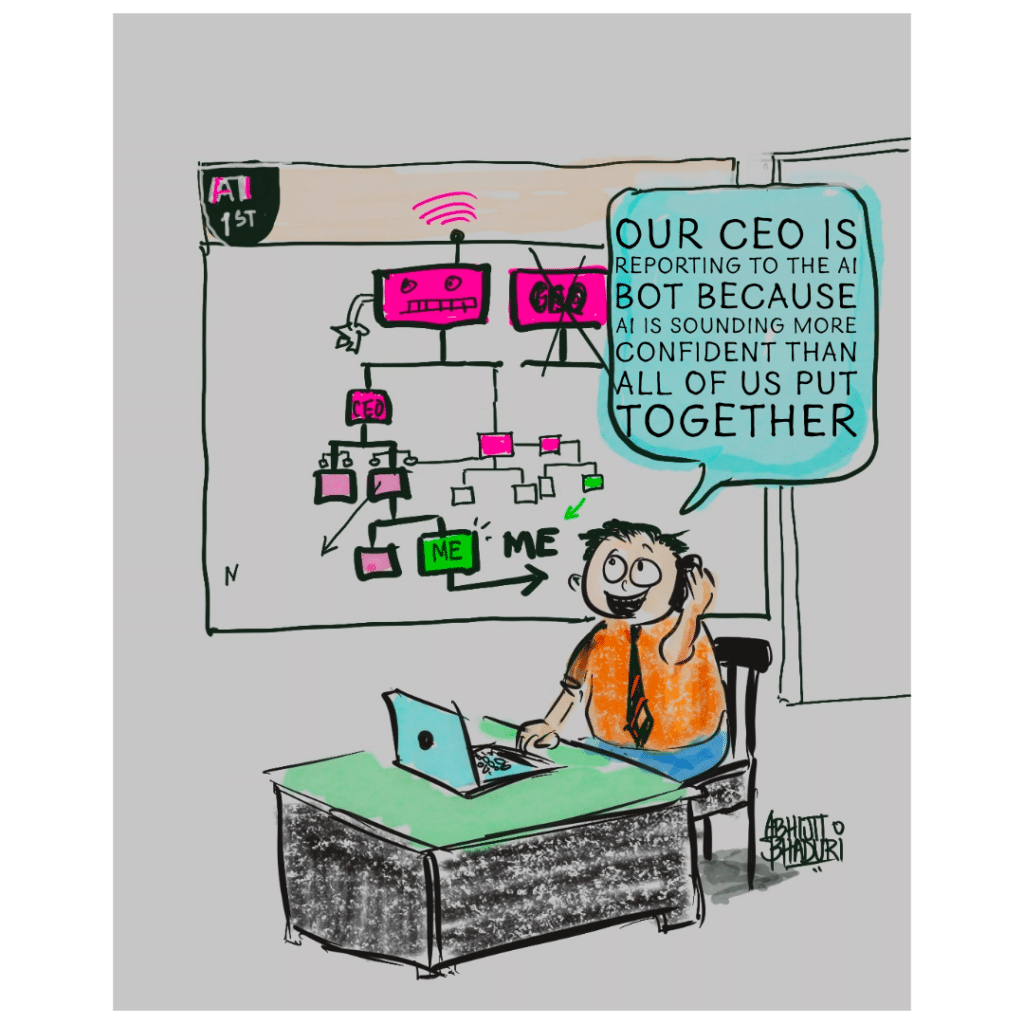
The better AI becomes, the easier it may be for humans to become worse at questioning it.
So AI adoption needs to develop a new human capability: not simply knowing how to use AI, but knowing when not to trust it.
That means deliberately practicing exceptions, failures and edge cases.
From Jobs to Human-Machine Teams
The deeper change is in how we think about work.
For much of the industrial era, we designed jobs around what a person could do. Automation then removed individual tasks.
The next phase is different. We will increasingly design human-machine teams around what each side does better.
AI brings speed, scale, memory and pattern recognition. Humans bring context, judgment, accountability, values and the ability to understand ethical consequences that may not exist in the data.
That changes the talent question too.
Instead of asking only, “What skills will our people need?” leaders should ask:
What decisions should remain human? What should AI recommend? What can AI execute? And what capabilities will humans retain even when they rarely use them?
The future of work is not simply about putting AI into the workplace.
It is about redesigning work
The winning organization will not be the one that lets AI fly everything. It will be the one that knows when to hand over the controls, when to take them back, and how to keep its pilots capable of flying.