Everyone talks about “the future of work” like it’s one single thing arriving on one single date. Our work identity is evolving. The rise of independent talent is a good place to understand the meaning of work

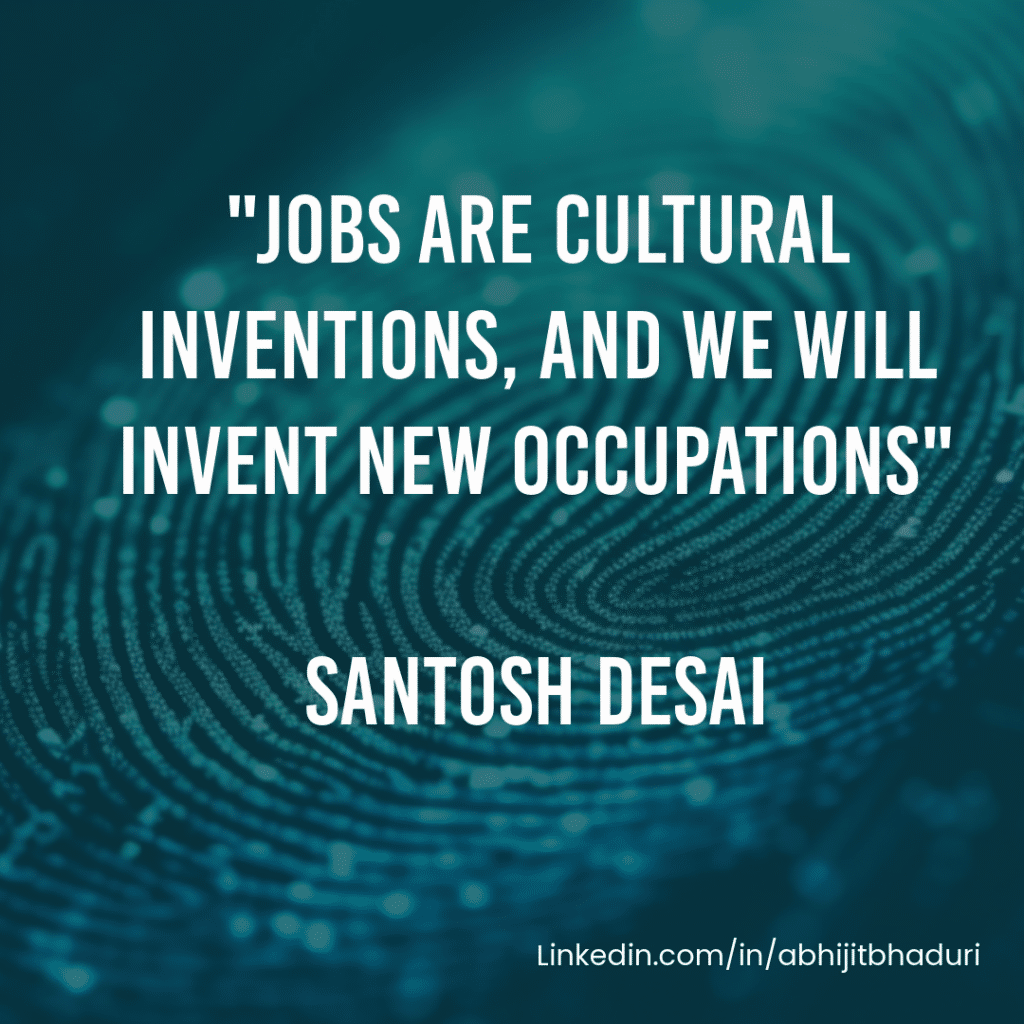
Do We Just Make Up Jobs? Yes
The 9 to 5, the pension, the one company for thirty years, that whole package is barely a century old, built for the factory era. It felt like a permanent structure only because we heard three generations of people. The job scene is changing because our needs are changing.
Certified cuddle therapy services exist in the US and other markets, built to address the loneliness and touch deprivation common in cities where people increasingly live alone. A real, paid, trained profession that responds to a need nobody would have named as a “job” a generation ago. Digital Legacy Manager is a newer service that manages a deceased person’s online accounts, cloud photos, social media, and even crypto wallets. Jobs aren’t handed down from some fixed list. They get built the moment enough people need the same specific thing solved.
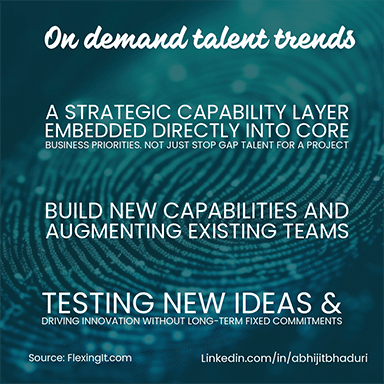
If jobs are inventions, the shift toward freelance, fractional, and on-demand work isn’t a breakdown. It’s an update. FlexingIt’s research describes this update already happening.
Which “Future of Work” Are You Even Talking About
People talk about the Future of Work as if it is one thing we are expecting to get unboxed on a certain date. It is not. “The future of work” gets used to describe at least three different timeframes, and they point in different directions.
- The short one, roughly one to two years, is cyclical. It’s hiring freezes, cost caution, boards nervous after a wave of layoffs. Many “independent talent is booming” headlines actually live here, and it’s closer to a symptom than a philosophy.
- The middle one, three to seven years, is structural. This is where Upwork’s 2026 data sits: skills that explicitly involve AI grew 109 percent year over year, while demand for core human skills like development, analytics, and design barely moved. That’s not panic. That’s companies rearranging how work gets done while still needing skilled people to do it.
- The long one, measured in decades, is the generational reframe. That timeframe doesn’t move in quarters. It moves across a working lifetime.
Independent Talent: Choice or Consequence
So is independent talent something people are choosing ahead of trouble, or something they’re falling into because of it? Genuinely, it’s both, and which one applies depends on where you’re standing.
Pre-emptive for experienced professionals : India vs US
For experienced professionals, it looks pre-emptive. FlexingIt’s data shows consultant registrations in India growing sharply over two years, led by professionals with nine to fifteen plus years of experience, not fresh graduates. These are people reading the shrinking shelf life of a permanent job and choosing to get ahead of it, building a portfolio while they still have the leverage to build one.
For everyone else, it looks like a byproduct. India’s white collar permanent hiring index recently declined in a single month, even as India’s white-collar gig workforce crossed 8.23 million jobs in FY26, up 21 per cent from 6.8 million the year before. That’s not everyone choosing freedom. That’s a real gap opening between the permanent job market and the flexible one, with people moving into the flexible side because the permanent door narrowed. PSU Watch
The US tells a related story from a different angle. Executive tenure has fallen sharply, and 446 public-company CEOs exited in 2025, a record year. Boards responded the way FlexingIt’s India data suggests Indian companies are also responding, by bringing in proven interim or fractional leaders instead of committing to another permanent hire that might not work out. In the US, this looks like risk management dressed up as flexibility. In India, it looks more like a structural rewiring of the whole hiring pipeline, not just the top. Alpha Apex Group
In the US, it’s largely boardroom caution after a bruising run of layoffs and leadership churn. In India, it’s a wider decoupling, where the permanent hiring pipeline has genuinely slowed while the flexible one keeps accelerating, partly fueled by global companies using Indian expertise at lower cost than hiring locally elsewhere.
Schools or Nursing Homes – what do we build
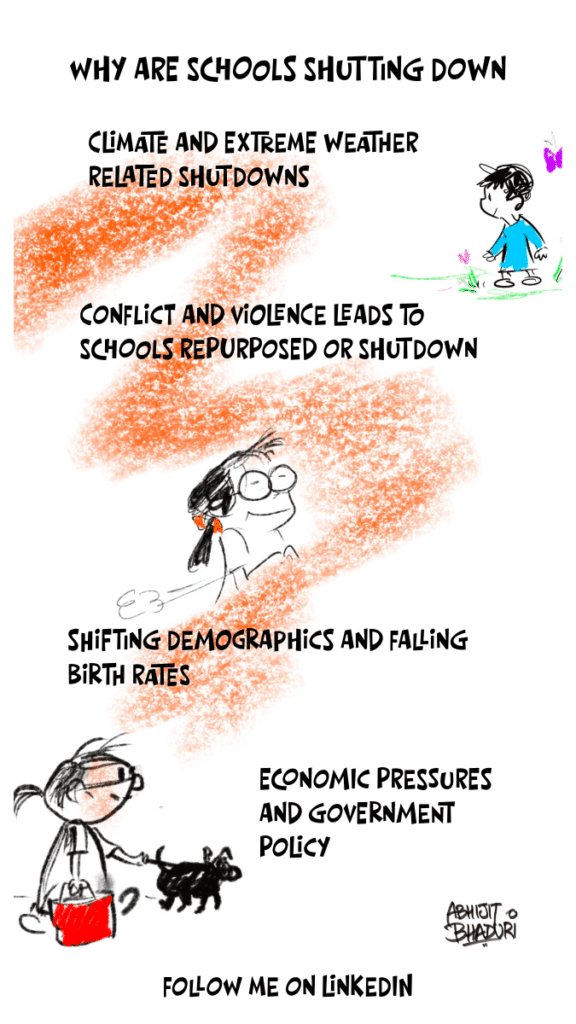
Opportunities emerge for a variety of reasons. Severe heatwaves led to widespread closures in the Philippines, with nearly half of Manila’s schools shutting down to protect students. In the Middle East alone, escalating violence left at least 52 million school-aged children with disrupted education as facilities were damaged or repurposed as collective shelters. Shifting demographics and falling birth rates are driving permanent school closures Will we need schools in future
The future of work is not one clean story. It’s a short term scramble, a medium term rearrangement, and a long term reinvention, all running at once, and independent talent shows up differently inside each one.
Being needed for something specific, and doing it well, was always the point of work. The job title was just the container built around that idea for a hundred years. That container is being rebuilt while people are still living inside it.
Jobs get created and destroyed for a million reasons. If the world is greying then expect geriatric support related professions to grow and schools for children shutting down. As societies like India see more people moving out to form nuclear families in urban areas, the needs experienced by dual income households will emerge.
If you had to guess, which timeframe is actually shaping your own career choices right now: the one year scramble, the five year skill shift, or the lifetime question of what work means to you?