Your best people aren’t lazy, they’re just too busy to think. They settle for “good enough” because they have no time to pause. We now read with our thumb and not with our forefinger. What about you?

The Meeting Where Nobody Talks
Walk into an Amazon meeting and you’ll see something odd. Everyone sits down. Nobody speaks. For the first 20 minutes, the room reads a six-page memo in total silence, takes notes, and only then opens their mouths.
Jeff Bezos built this on purpose. He banned PowerPoint because slides let people hide behind bullet points. You can’t hide behind a full paragraph. Writing forces you to close the gaps in your own thinking before anyone else even sees it.
He called this “meeting culture” one of the smartest things Amazon ever did. He understood something most companies still don’t. Busy people will never have depth – they don’t have time. They have no time to read, no time to talk to colleagues – unless there is a transaction and no time to reframe a problem. They make do with being average and relay on AI slop to get through.
If you want depth, build it into the way of working, on purpose, or it simply won’t happen.
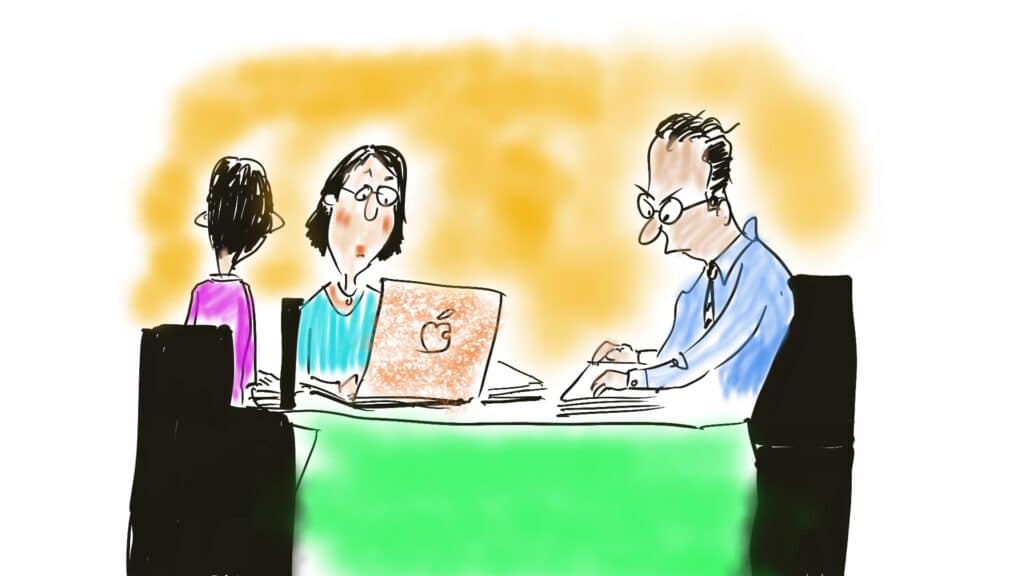
Busy People Don’t Read, They Skim.
Busy employees don’t have time to innovate. They don’t have time to go deep. So they settle for whatever is good enough, and “good enough” quietly becomes the standard everywhere. They don’t read the report, just the executive summary. Once you get the idea in 3 seconds, you scroll to the next 3 seconds.
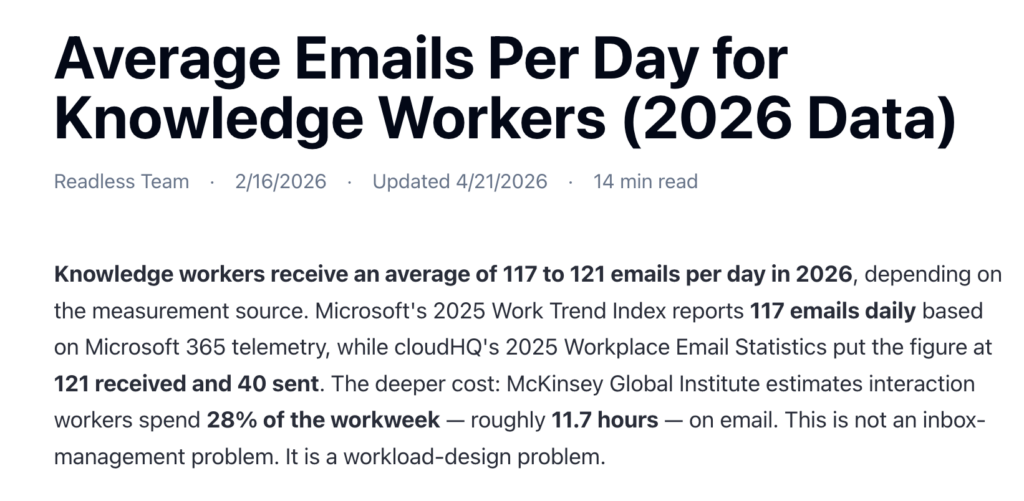
Research shows people actually spend even less time than that. Industry studies find the average read time for an individual email is just 9 to 12 seconds, with up to 30% of messages glanced at for fewer than 2 seconds. Because of this, scanning heavily replaces actual reading Not because people are careless, but because there’s an interruption every two minutes. Nobody stands a chance at depth under that kind of fire.
Our entire organization runs on executive summaries of reports produced by junior who use AI to write the reports. They know no one will read page 4.
Anonymous
Only 20% of employees put in real discretionary effort, the extra thinking nobody can force out of you. It only shows up when someone actually wants to be there, not when someone is just trying to survive the calendar.
And it shows in the numbers. Gallup found only 23% of employees worldwide were engaged in 2022. By 2025, that number had dropped to 20%. Each point represents roughly 21 million people. That’s tens of millions of workers who quietly checked out in three years.
Why Do We Skim & Scroll
The average employee has to navigate 140 different tools just to get through a normal workday. Every tab, every notification, every switch is one more tax on the attention that deep thinking actually needs.
So people skim. Executive summaries win. And weak signals, the small early warnings that something is about to go wrong, or about to become a huge opportunity, get missed completely. Busy organizations don’t see the danger coming until it’s already too late to do anything calm about it.
AI is not fixing this. AI is pouring more content, more speed, and more decisions into a system that was already moving faster than the humans inside it.
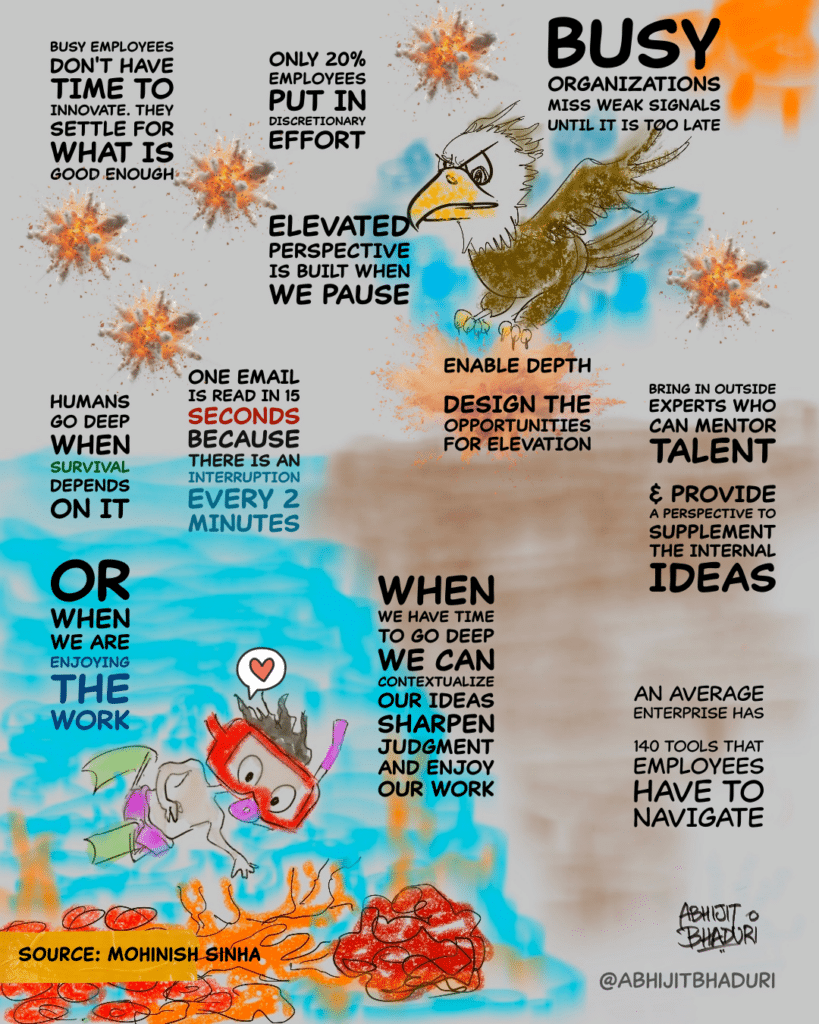
Recently I heard @Mohinish Sinha talk about how to build depth and elevation – the altitudes missing in workplaces. Here is the summary.
Two Reasons to Go deep
There are only two conditions under which people naturally go deep. One is survival, when the stakes are so high that shallow thinking simply isn’t an option. The continuous threat of layoffs is driving even highly paid white collar employees to unionise. Layoffs are the continuous slow burn threat.Even senior leaders of Fortune 100 companies are not immune as Walmart’s leaders will tell.
The other ireason to go deep is enjoyment. This happens when the work itself pulls you in and you lose track of time. You are experiencing flow.
Most modern jobs offer neither. They aren’t dangerous enough to trigger survival focus, and they aren’t designed well enough to trigger enjoyment. So people default to the shallow middle, doing just enough to get through the day.
Permission to Pause
Here’s something to think about. An eagle doesn’t dive by flapping harder. It rises first. It pauses at height, gets the wider view, and only then commits to the dive with total precision.
Organizations need to design that same pause into work. Give people permission to explore. Bring in outside experts who can mentor internal talent and add a perspective nobody on the inside has time to develop on their own. That combination, protected time plus outside perspective, is what actually builds judgment and sharpens pattern recognition over years, not minutes.
Amazon didn’t fix this with a slogan. They fixed it by redesigning the first 30 minutes of every meeting.
If your organization is running its people on the clock speed of a machine, what would you redesign first? The meeting. The calendar. Or the entire definition of what a good day’s work even means.
Read this: https://www.readless.app/blog/average-emails-per-day-knowledge-workers-2026