 Groundswell means a broad deep undulation of the ocean, often caused by a distant storm or an earthquake. It could also mean a sudden gathering of force, as of public opinion. Social media feels like that – especially Twitter. There is something about the immediacy of the medium that is both attractive and scary. With its 140-character limitation, Twitter has a way of avoiding long drawn explanations that lets people skim through most of the things that are written. The ability to put links and send someone a direct message and retweet an idea, a slice of conversation, makes it easy for the message to be spread. It is unlike any traditional medium. It is a Groundswell.Twitter’s availability on all kind of mobile platforms makes it easy for everyone to be spontaneous. All these features combined together have made twitter a tool that has overthrown authoritarian regimes. It also makes democracies more vibrant. The impatience of the medium makes it hard to separate fact and fiction. We can all be in a global cocktail party where the heads of state, spiritual leaders, and CEOs mingle with the lowest common denominator. The expert and the novice have an equal opportunity to influence the world at large.
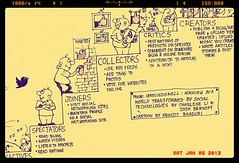 Paradoxically, the spread of digital activism is drawing the people in power to put their version of the “truth” into the open space. A new survey from the Digital Policy Council (DPC) shows that three out of four heads of state across the world are on Twitter. The report goes on to say, “a total of 123 world leaders out of 164 countries have accounts on Twitter set up in their personal name or through an official government office. In our last report in August of 2011 only 69 out of 164 countries were using Twitter.”Wikileaks mission is to “publish and comment on leaked documents alleging government and corporate misconduct”. Twitter takes the same philosophy to the next level by doing this in real time, turning the whole world into a set of evangelists and whistle blowers. When IBM recently surveyed 1,709 CEOs around the world, they found only 16% currently participating in social media–but they predict the percentage will likely grow to 57% within 5 years.All social technologies develop in two stages. In the first stage, the medium is purely social. It establishes a human connection across shared interests. Stage two happens only after the social need has been fulfilled. It is only then that the medium will be used to do things that may have a payoff. When we first join a large group, we are initially cautious and want to put our best foot forward. After a while we get comfortable being in our skin. The same happens on Twitter.Social media is fast growing as a great way to build engagement within the organization (with employees) as well as outside (with partners, vendors and collaborators). Then, why are 75% of heads of state using a medium that only 16% heads of business are using? Maybe the CEOs do not see the business benefit as tangibly as they see the risks of being so accessible. The US President Barack Obama communicates with 25 million followers on Twitter. That is the virtual equivalent of stepping into a public square without his bodyguards and security cover. If he can, why can’t the CEO? The smart ones are not waiting for digital activists to force them to engage. They are not waiting for the groundswell.——————————————————-Download and use the cartoon from hereFollow me on Twitter @abhijitbhaduriRead this post on my TOI blog: <Click here>
