Skill distance can quietly reshape norms inside elite institutions ie a large gap between expert and novice becomes very large, people tolerate behavior they would reject in ordinary settings.

When Genius Runs the Kitchen
Why did so many young chefs endure it?
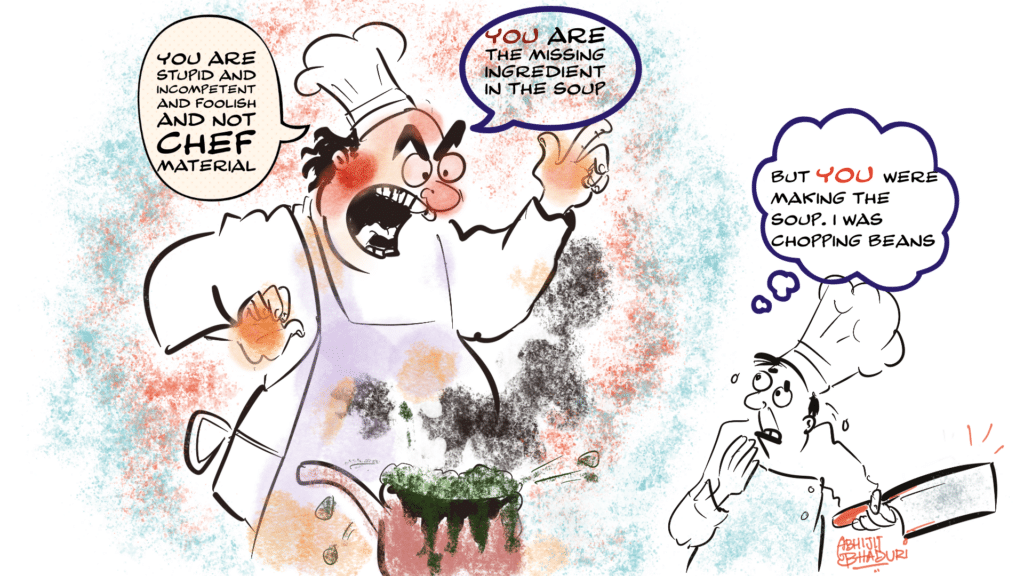
Part of the answer lies in skill distance. Haute cuisine is not merely cooking. It is a highly specialized craft combining botany, fermentation science, aesthetics, and speed under extreme pressure. A dish may contain twenty components assembled in seconds. The perceived mastery gap between the chef and a new intern can feel enormous.
When novices believe the master possesses rare knowledge that could transform their careers, tolerance thresholds shift. Public shaming, brutal hours, even humiliation become rationalized as the price of learning.
Milgram’s obedience experiments in the 1960s, shows that people defer strongly to perceived experts—even when authority behaves unreasonably. Later work in organizational psychology by Jeffrey Pfeffer and Robert Cialdini shows similar dynamics in prestige hierarchies: individuals accept harsher treatment when the authority figure controls access to status and advancement.
In Noma’s case, the reward was powerful: a line on the résumé that could launch a global career.
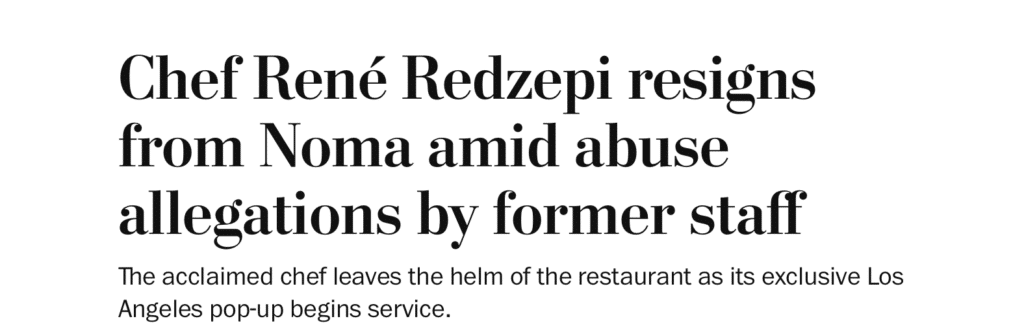
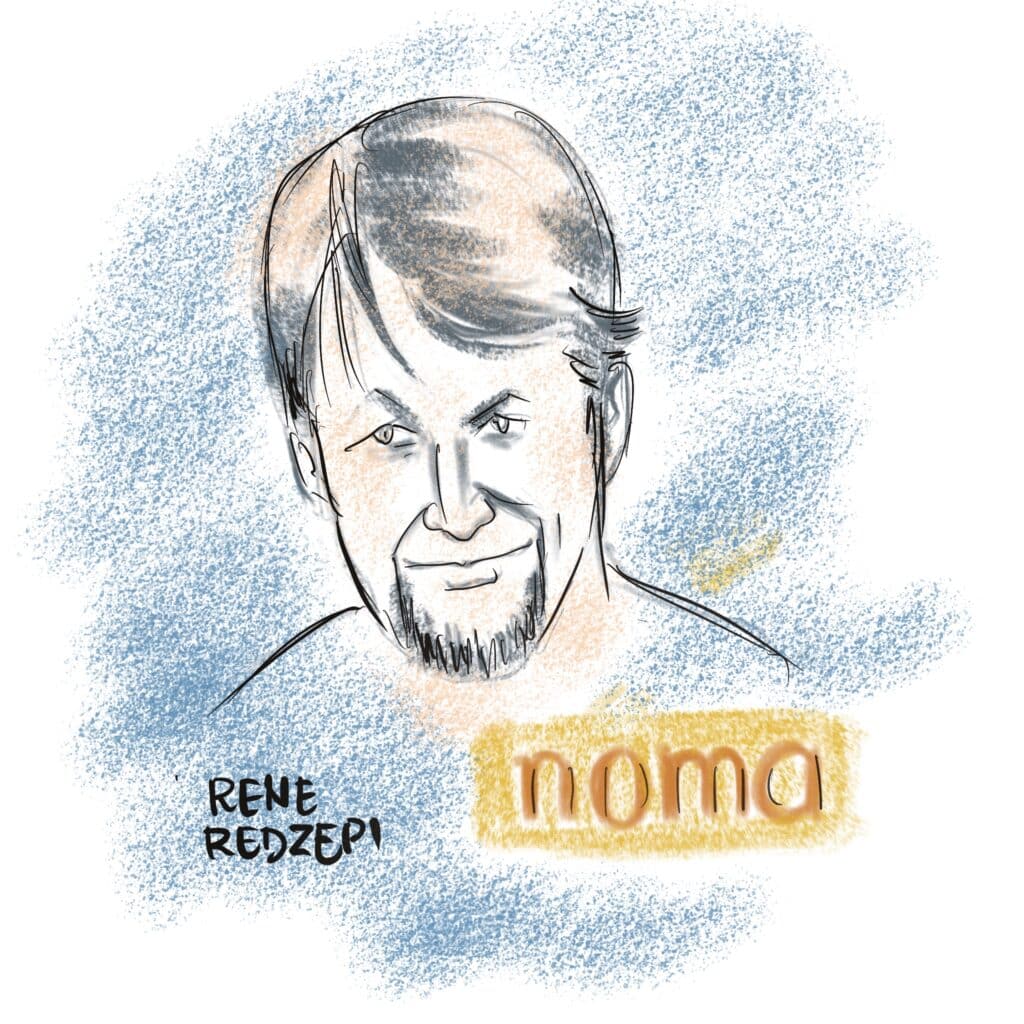
“The New York Times this week reported that as Noma began its ascent to the pinnacle of the restaurant world with its focus on hyperlocal ingredients and precise and inventive compositions under the banner of New Nordic cuisine, Redzepi routinely abused workers. From 2009 to 2017, he sometimes punched and slammed staffers against walls, and expressed his dissatisfaction by jabbing them in the legs with a fork, crouching below the counters so that diners wouldn’t see, the Times reported.”
When the Skill Gap Widens, Norms Shift
Restaurants are not unique. The same structure appears in many elite domains. In classical music conservatories, prodigious conductors have historically shouted, humiliated, and terrorized orchestras. Young musicians tolerated it because the conductor controlled access to elite stages.
In venture capital, powerful investors sometimes behave with extraordinary bluntness toward founders seeking funding. Entrepreneurs often endure it because capital allocation authority sits with a small group of individuals whose judgment carries enormous economic weight.
The larger the skill distance, the more people rationalize difficult environments as part of the apprenticeship.
In elite design studios or fashion houses, interns frequently accept unpaid or poorly paid positions simply to learn under a celebrated creative director. The perceived skill distance makes proximity itself feel valuable.
Across these domains the pattern repeats: The larger the skill distance, the more people rationalize difficult environments as part of the apprenticeship.
Then Why Do Football Coaches Rarely Cross the Line?
The comparison with sports reveals something important.
Famous football coaches are often fiery personalities. But physical violence against players is extremely rare. The reason is structural.
Professional athletes possess countervailing power. They are highly paid assets with agents, unions, and legal protection. A player struck by a coach could trigger lawsuits, league sanctions, and enormous financial consequences. Economic power and collective bargaining balance out expert power.
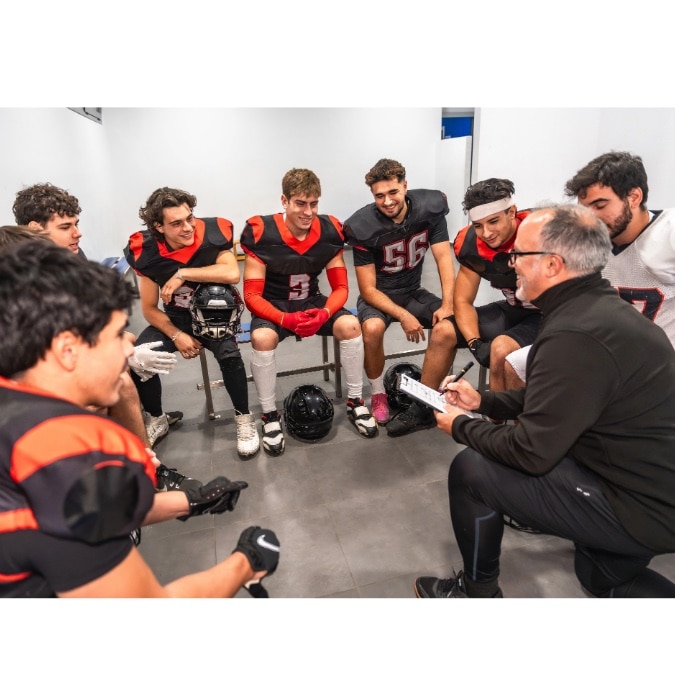
Skill distance exists—coaches have strategic expertise—but economic power flows in both directions.
In restaurant kitchens the dynamic historically ran the other way. Young cooks had little leverage, few protections, and enormous incentives to endure hardship for future opportunity.
Where counterpower is weak, authority expands.
Excellence, power & excess often co-exist
Across industries a simple behavioral pattern emerges.
Large perceived skill distance creates psychological deference.
Deference reduces resistance to authority.
Reduced resistance allows stronger personalities to push boundaries.
This does not inevitably produce abuse. Many extraordinary mentors create demanding environments without crossing ethical lines. But the structural conditions make excess easier to rationalize.
Sociologist Pierre Bourdieu described similar dynamics in cultural fields where prestige acts as a form of capital. When symbolic capital—reputation, awards, influence—becomes concentrated, behavior that would normally be challenged becomes normalized.
The result is a paradox: the same system that produces excellence can also enable excess.
What This Means for Creative Industries
Several trends are beginning to change this equilibrium.
- Transparency is rising. Social media and investigative journalism make hidden workplace cultures visible. Stories that once remained inside the brigade now reach global audiences.
- The apprenticeship model is weakening. Younger workers increasingly question unpaid internships and extreme hours. Industries built on prestige alone struggle to attract talent without fairer conditions.
- Technology is narrowing certain forms of skill distance. Artificial intelligence tools are beginning to accelerate experimentation in fields like food science, design, and music composition. When knowledge spreads faster, the mystique surrounding elite expertise diminishes.
None of this eliminates mastery. Extraordinary chefs, designers, or musicians will still exist. But the psychological distance between master and apprentice may shrink, redistributing power inside creative systems.
The Deeper Insight
The Noma story is not simply about one chef’s behavior. It reveals something more universal about human organizations.
When a system concentrates prestige, opportunity, and expertise in the hands of a few individuals, social norms bend around them.
Skill distance, in other words, is not just about knowledge.
It quietly shapes how power behaves.
As for René Redzepi, he quit Noma.