
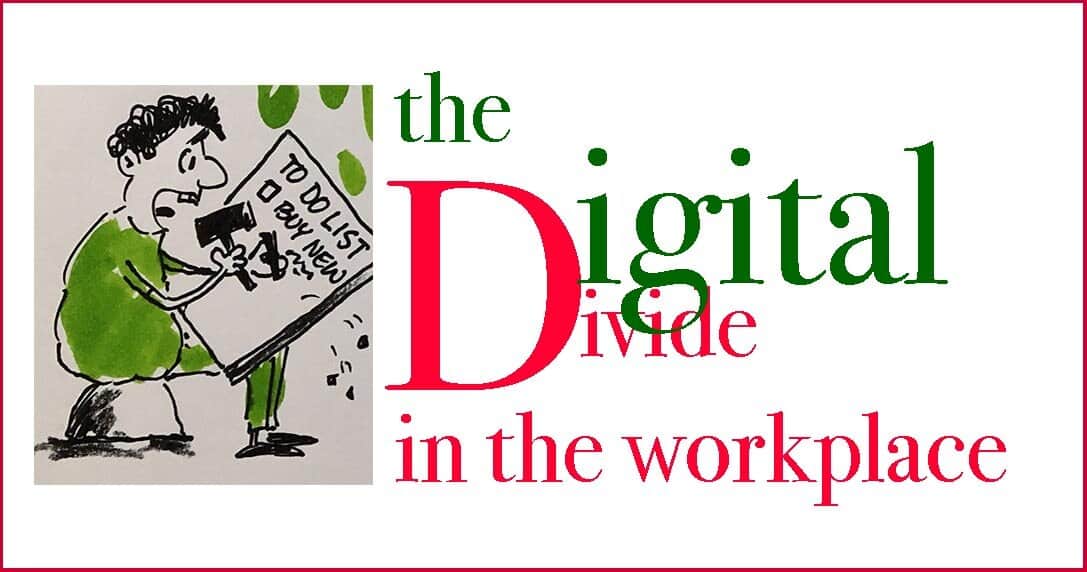
 The digital divide is not new. Many years back when I was working at an ad agency, we were battling high attrition among the creative artists. Any salary increase that we offered became the base for bargaining by the employee with the headhunter. We had just bought a few state of the art Macintosh computers. When a new hire expressed delight at being able to use the latest software and Mac, we discovered that having cutting edge tech can be a powerful attraction for employees.The digital divide is in the workplace. Unisys published a global study where they surveyed more than 12,000 workers in April 2018 across 12 countries. They wanted to know how tech impacts their life at work. The survey categorized leader and laggard organizations based on respondents qualifying their employer as either ahead of or behind on technology when compared to the competition. The digital divide is truly impacting people at work, the study found.
Digital divide impact
A 2017 report by research and polling company Gallup found that actively disengaged employees cost the U.S. $483 billion to $605 billion each year in lost productivity. The cost of attrition cannot be overlooked, either – studies commonly predict that every time a business replaces a salaried employee, it costs six-to-nine months’ salary on average to do so.
Attrition
The level of frustration directly correlates with the threat of attrition: workers at technology laggards were more likely to want to leave to go work elsewhere, as compared to their counterparts at technology leaders.
Productivity
 According to the survey, “Devices serve as the biggest pain point for workers at “technology laggard” organizations, with 45 percent of these workers complaining that they are held back from being more productive by outdated devices, or 136 percent more likely as those who work for “technology leader” organizations (19 percent).”
Security
Organizations often try to solve the problem by allowing the employees to bring their own devices to work. The BYOD option delights the employees but is a nightmare for the cybersecurity team in the workplace. Employees download apps and visit sites that compromise on security. That makes sensitive data and information available to hackers.
What can be done
 As the workers get more connected in their life outside the organization, they get used to better apps, faster connectivity and delightful experience. Most of the apps where the people spend time like Facebook, Instagram, Snapchat etc have been designed by the best User Experience designers of the world.Coming into the workplace can feel like a serious downgrade. The world is getting so hyperconnected that being able to access the world beyond the office walls is not just a productivity strategy but is also a great way to get new ideas.The world is moving towards an “Open Talent” model. It is more important to be able to have access to the talent than to own it. Slowing down your own employees with outdated tech is like asking them to run a race while tying a ball and chain to their feet.======A version of this appeared in Times of India on 4 July 2018Want to call me for a Keynote? Mail me at abhijitbhaduri@live.comTweet your views @AbhijitBhaduri or simply join almost 700,000 followers on LinkedIn.