
Albert Einstein did not get the Nobel Prize for his theory of relativity. The check of $1.2 million for the prize expires after 12 months. The prize is never given posthumously. One “Curious Family” definitely has the Nobel Prize gene. This piece was first written on October 11-2010. Updated in June 2026
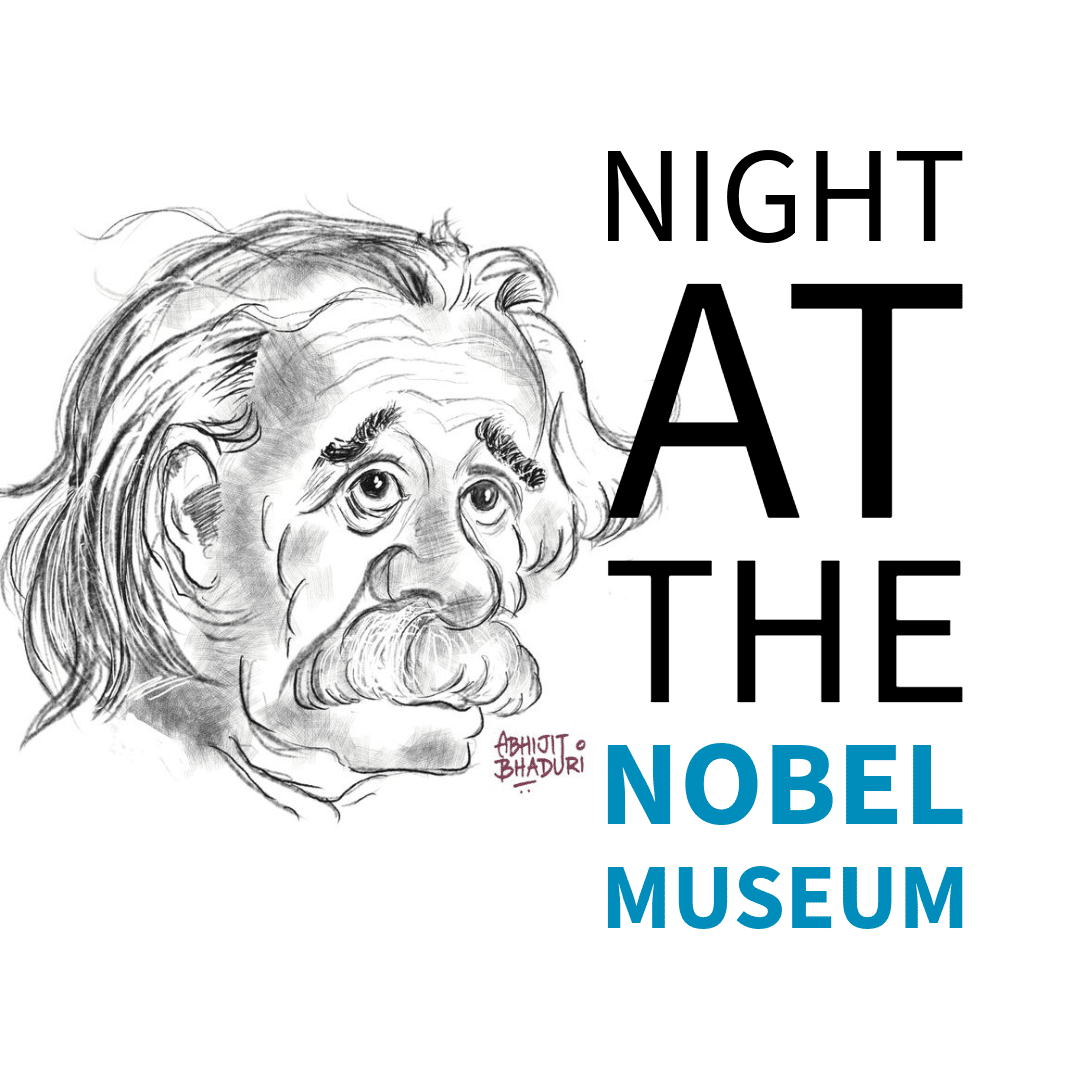
When my trip to Stockholm got happened in 2010, I made only one promise to myself, that I would go and see the Nobel Museum. That big day was on 9th October 2010. What made it even more exciting is that the Nobel Museum is in the same building where the 74 year old Peruvian poet Mario Vargas Llosa was chosen on 7th Oct 2010 to get that year’s Nobel Prize for Literature. I had written about the poetry of Pablo Neruda some weeks back. Read the article here.
I had the unforgettable experience of having dinner at the Nobel Museum. I was soaking in the opportunity of dining with the greats. Feeling truly small as I sat there surrounded by giants.
The Famous Five Guilt Trip
Think of the Nobel Prize as the Oscars, the Super Bowl, and the Forbes 400 list rolled into one except the winners actually “changed the world”. By the way I instantly distrust the pompous claim of “I am changing the world” – most claimants aren’t. But I stray.
Every year since 1901, the prize has been awarded for achievements in Physics, Chemistry, Physiology or Medicine, Literature, and Peace. Economics was an afterthought. The sixth prize, Economics, was added in 1968 by Sweden’s central bank. Nobel purists wonder why this matters enormously to them and barely at all to everyone else.
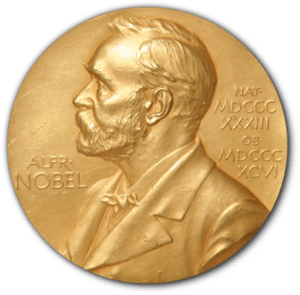
Alfred Nobel wrote in his will that the prizes should go to those who “shall have conferred the greatest benefit on mankind.” Great line. Also worth noting that Nobel made his fortune inventing dynamite. This may be the most expensive guilt trip ever funded.
Between 1901 and 2025, the Nobel Prizes were awarded 633 times to 1,026 people and organizations. 67 women have been awarded the Nobel Prize in total, with Marie Curie the only woman honored twice. The prize today is worth around $1.2 million. In 1901 it was roughly $16,500. Still life-changing money then. Today it would not buy you a two-bedroom apartment in Austin, Texas, but the medal looks great on a shelf.
One thing nobody tells you: the Nobel check expires after 12 months. The honor does not. Keep that in mind as you read.
Sealed for 50 Years
The 2024 Nobel in Physics went to John Hopfield and Geoffrey Hinton for foundational work in machine learning and artificial neural networks. The committee essentially gave a Physics Nobel to the grandfathers of the AI that is currently rewriting everyone’s job descriptions. The 2025 prize went to three scientists for quantum mechanics research that is making quantum computing real.
John Bardeen won the Physics Nobel twice, in 1956 and 1972. The first time, he left his family at home so the kids wouldn’t miss school. He promised the King of Sweden he’d bring the family next time. Imagine having to win the Nobel for the second time just to take the kid to Sweden.
- Brian Schmidt, who won the 2011 Physics Nobel for co-discovering dark energy, had his gold medal flagged by airport security in Fargo, North Dakota. A Nobel Prize sets off the same alarms as your belt.
- Physics deliberations are sealed for 50 years. We will find out what really happened in the 2024 AI decision sometime around 2074.
Chemistry and Peace – 2 Medals 1 Winner
Linus Pauling is the only person ever awarded two unshared Nobel Prizes. One for Chemistry in 1954 and another one for Peace in 1962.
- Marie Curie won her 1911 Chemistry Nobel solo, after her husband died, while navigating a very public personal scandal. The Swedish Academy reportedly suggested she skip the ceremony. She showed up anyway.
- After Hitler banned Germans from accepting Nobel Prizes, chemistry winners in 1938 and 1939 were forced to refuse their awards. They eventually received their diplomas and medals years later but not the prize money. It had already lapsed. Remember I told you that the Nobel check, like airline miles, expires in a year if you don’t use it.
Dying to Win
The average wait between a Nobel-worthy discovery and actually receiving the prize is 20 to 30 years. One researcher waited 55 years. If you are doing groundbreaking work right now, start practicing your acceptance speech for 2050.
- In 2011, Ralph Steinman won the Medicine Nobel three days after he had already died. The committee did not know. Because deliberations are secret, nobody could call to check. They decided not to rescind the award. He remains the only person to receive a Nobel Prize posthumously under the modern rules.
- Sigmund Freud was nominated for the Medicine Nobel for 12 straight years. A committee expert concluded in 1929 that his work had “no proven scientific value.” Freud was then nominated for Literature. He never won either. That would have hurt his id, ego and superego.
No Sartre You Won’t Get the Nobel
- Jean-Paul Sartre pre-emptively wrote to the committee in 1964 asking not to be considered. The committee replied that whether he wanted it was irrelevant. He declined publicly. He then wrote again asking if he could just have the money without the medal. The answer was no. Sartre lost a Nobel Prize on a technicality of his own creation.
- Boris Pasternak accepted the 1958 Literature Nobel, then was forced by Soviet authorities to decline it because his novel “Doctor Zhivago” was banned in the USSR. His son collected the diploma and medal three decades after the award.
- The Nobel Prize in Literature has been shared only four times in its entire history. The committee treats literature as a solo sport..
Not at Peace
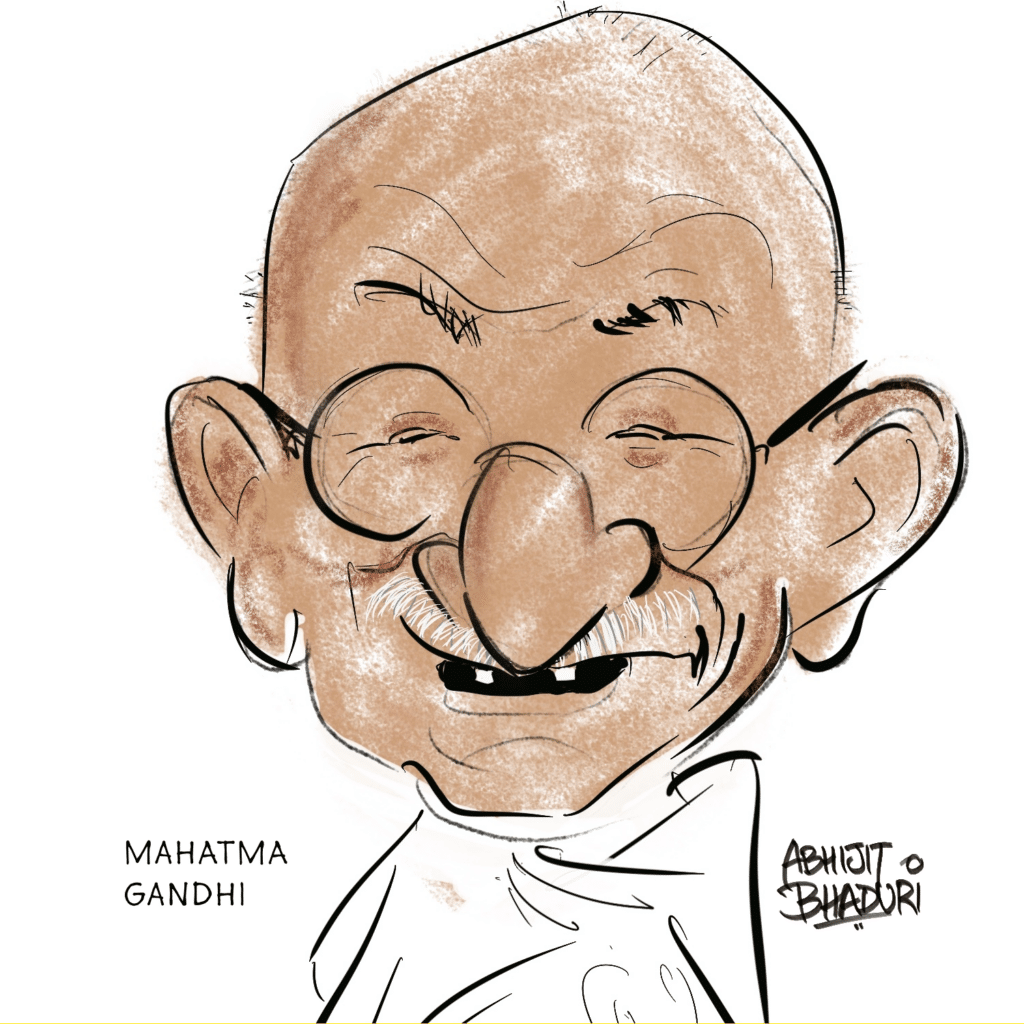
In 1948, the committee chose not to award the Peace Prize to anyone, citing no suitable living candidates. Gandhi had been assassinated earlier that year. The committee refused to give the prize posthumously and refused to give it to anyone else either. The most famous person never to win a Nobel Peace Prize did not lose it. The committee simply stood down.
- Hitler was nominated for the Nobel Peace Prize in 1939. A Swedish legislator submitted it as political satire. Nobody laughed. The nomination was quickly withdrawn.
- Three laureates received the Peace Prize while they were in prison. When Liu Xiaobo could not attend the 2010 ceremony in Oslo, organizers placed an empty chair on stage. That chair became one of the most powerful images in the history of the prize.
Economically speaking
The Economics Nobel is the only prize Alfred Nobel himself did not create. The Nobel family has occasionally objected to it being called a Nobel Prize at all. It is the prize that gate-crashed the party and never quite left.
- The oldest Nobel Prize winner ever was 90-year-old economist Leonid Hurwicz, who won in 2007. He had to be helped to the podium. His acceptance was a triumph of stubbornness over biology.
- Robert Lucas won the Economics prize in 1995, but his ex-wife had inserted a clause into their 1989 divorce agreement entitling her to half the prize money if he ever won. The clause was set to expire just weeks after the announcement. It did not expire in time. Economic theory, met economic reality.
Curious Case of Curie Family
No family in history has collected more Nobel connections than the Curies. Marie and Pierre won Physics together in 1903. Marie won Chemistry solo in 1911. Their daughter Irene and her husband won Chemistry together in 1935. Marie’s son-in-law later accepted the Nobel Peace Prize on behalf of UNICEF in 1965. Six Nobel connections. One family. Truly radioactive.
Alfred Nobel signed his will in Paris in November 1895, leaving 94% of his assets to fund the prizes. His family contested it. Norway’s parliament did not approve it until 1897. The first prizes were awarded on December 10, 1901 — the fifth anniversary of Nobel’s death — the same date they are still awarded today, 125 years later.
The check expires after 12 months. The honor does not. The medal is yours to keep, sell, or give away. But once the committee calls, you are a laureate whether you want to be or not.
Just ask Jean-Paul Sartre.