
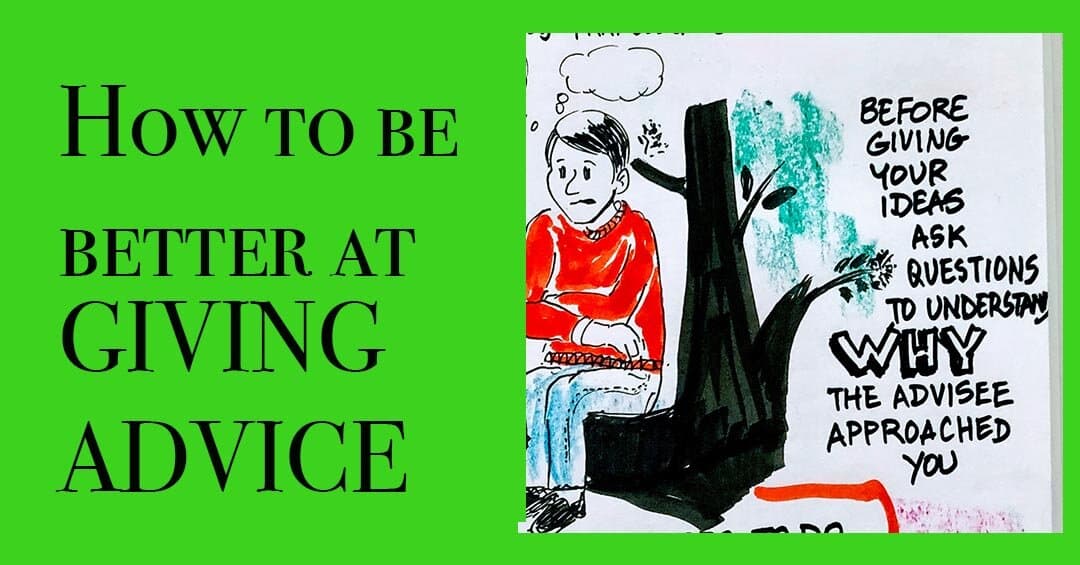
 Every year organizations initiate mentorship programs and then that the advice givers and advice seekers are both disappointed with the program. For one, the advice givers overestimate the likelihood that their advice will be taken. A big reason for the disappointment is that advice givers focus on the benefits, while the one receiving advice tends to worry about the cost of implementing the advice.Here are three tips from Francesca Gino to become better at giving advice:
- ASK WHY: Find out why the advise thought of reaching out to you in the first place.
- MODEL THE BEHAVIOR: When leaders give speeches to employees about Learning Agility it rings hollow if the employees have never seen the leader struggle to learn something new.
- STEP INTO THEIR SHOES: Stepping into the shoes of the advice receiver will help the advice giver understand the context in which the advice will be implemented. Empathy matters. Especially when you give advice.——–Have a question? Write to me at abhijitbhaduri@live.comSign up for free at abhijit2.spidertrainers.com and get access to more drawings and ideas you can use.Source: https://www.scientificamerican.com/article/how-to-give-better-advice/
Here is another article by Francesca Gino and Adam Grant on The Hidden Advantages of Quiet Leaders
1 Comment
[…] Republished with permission and originally published at http://www.abhijitbhaduri.com […]