As organizations flattened hierarchies in pursuit of AI efficiency, they killed employee trust. Middle management brings human judgment and purpose.
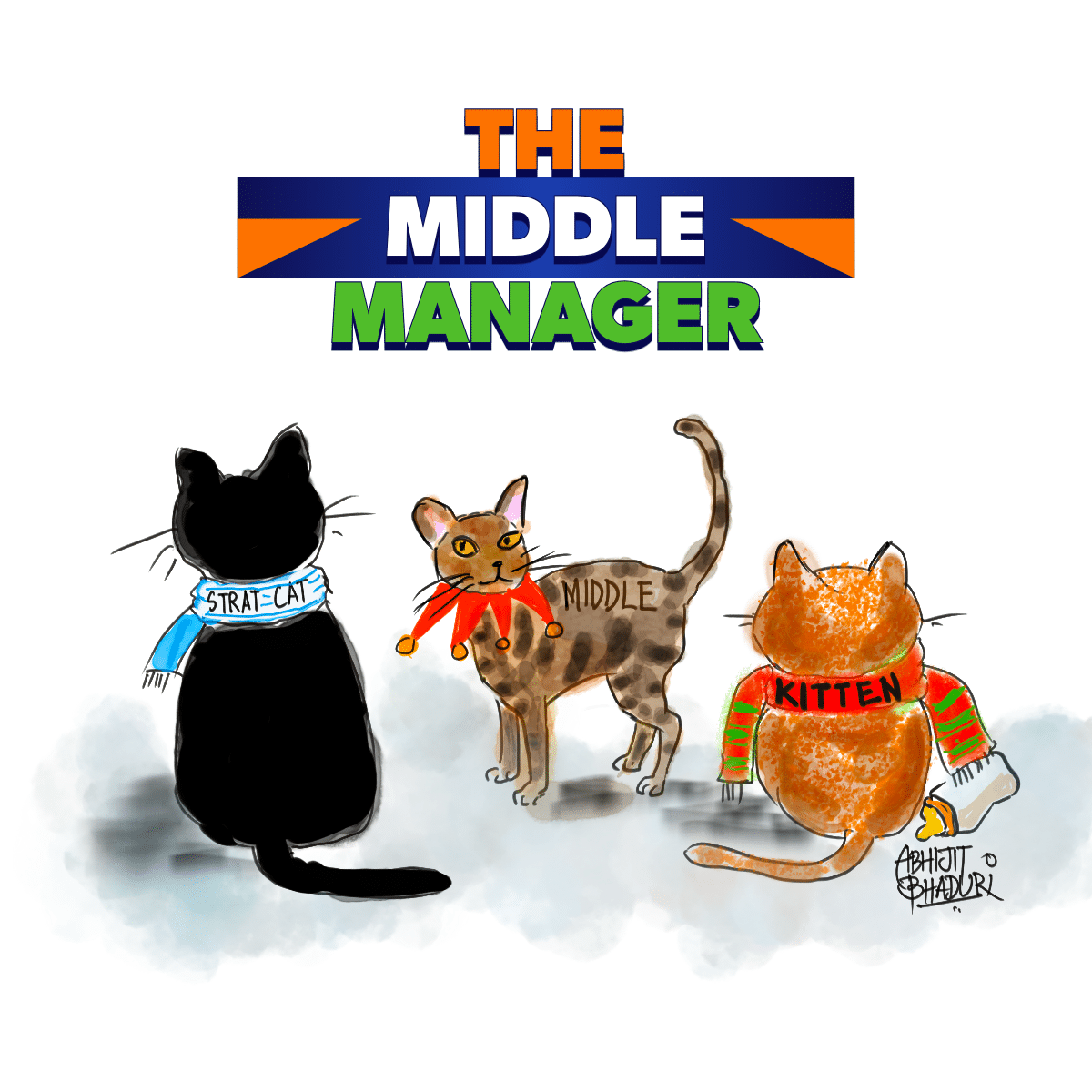
In 2023 Meta began aggressively laying off middle managers and shifting others back into individual contributor (IC) roles. Zuckerberg created a highly flattened structure with massive spans of control (sometimes up to 50 engineers per boss).
By late 2026, the experiment hit a wall, particularly within highly complex technical units like the Applied AI division. Realizing that 50-to-1 ratios starved employees of coaching and strategy execution, Meta quietly approached individual contributors and asked them to step back into middle management roles. Zappos, Medium, GitHub and Google have brought back middle managers after trying to flatten the org.
Fast forward to today, and the reality check has arrived.
Companies like Meta are quietly inviting employees back into managerial roles. Why? Because while algorithms can optimize for clinical efficiency, they are completely blind to organizational effectiveness.
Here is what the rush to delete middle management missed—and why restoring it is a strategic imperative in the AI economy.
1. The Efficiency vs. Effectiveness Trap
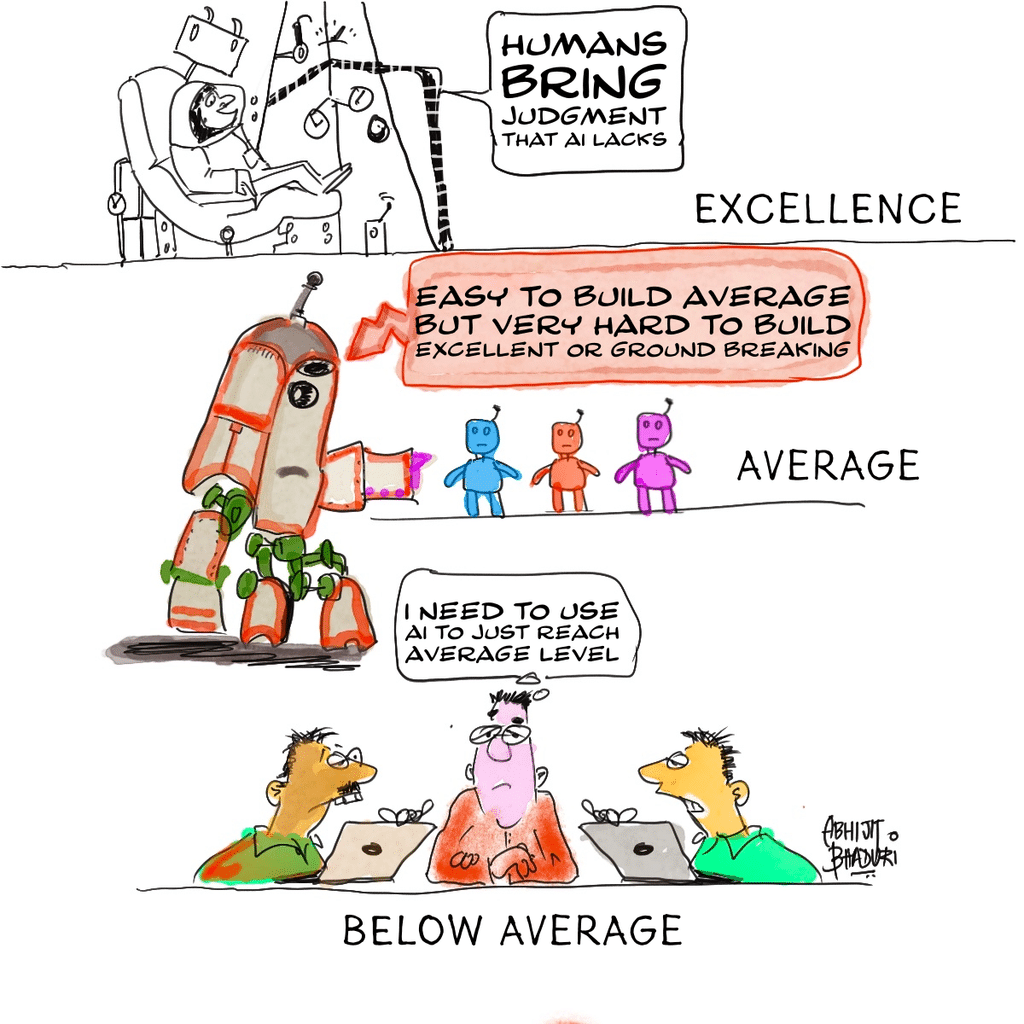
AI is exceptionally good at turning incompetent execution into average performance. Give a novice an AI prompt, and they instantly reach baseline competence.
The AI Gap: Machine intelligence can elevate the incompetent to average, but it cannot elevate the average to excellent.
That jump requires human judgment, pattern recognition, and contextual nuance—the exact qualities middle managers cultivate across an organization. When you remove managers, you don’t eliminate friction; you eliminate the critical escalation paths, coaching, and trust required to handle non-routine challenges.
2. The Pipeline Paradox
73% of hiring managers rank critical thinking as their #1 required capability (with AI skills ranking fifth).
Yet, over a third of enterprise companies are actively replacing entry-level roles with AI.
By automating away the entry-level sandbox, organizations are destroying the very environment where young talent historically developed critical reasoning, business acumen, and decision-making skills. If you gut the foundation and remove the middle scaffolding, where will tomorrow’s executive leaders come from?
3. Identity Economics & The Loss of Trust
Work is never just a financial transaction; it is anchored in identity, purpose, and belonging.
Neurological studies show that when humans lack clarity about their place within an organizational structure, stress spikes and learning capacity drops to its lowest levels. When companies treat human talent as disposable line items that can be deleted and brought back on a whim, they destroy psychological safety.
- Efficiency-First Model: Views employees as budget lines. Results in quiet quitting, transactional effort, and zero discretionary innovation.
- Identity-Centric Model: Views managers as talent catalysts. Builds trust, cultivates skill portability, and unlocks going above and beyond.
You can’t be “AI Forward” & “Employee Backward”
The middle manager of the future is not a task-checking administrator. They are a career coach, context provider, and steward of human capability. Organizations that recognize management as a strategic asset, rather than a line-item expense, will be the ones that actually thrive in the AI era.
Have you seen your organization rethink its stance on middle management recently? How are you balancing machine speed with human judgment in your teams?
Buy this book from here https://tinyurl.com/jypwk2sa