
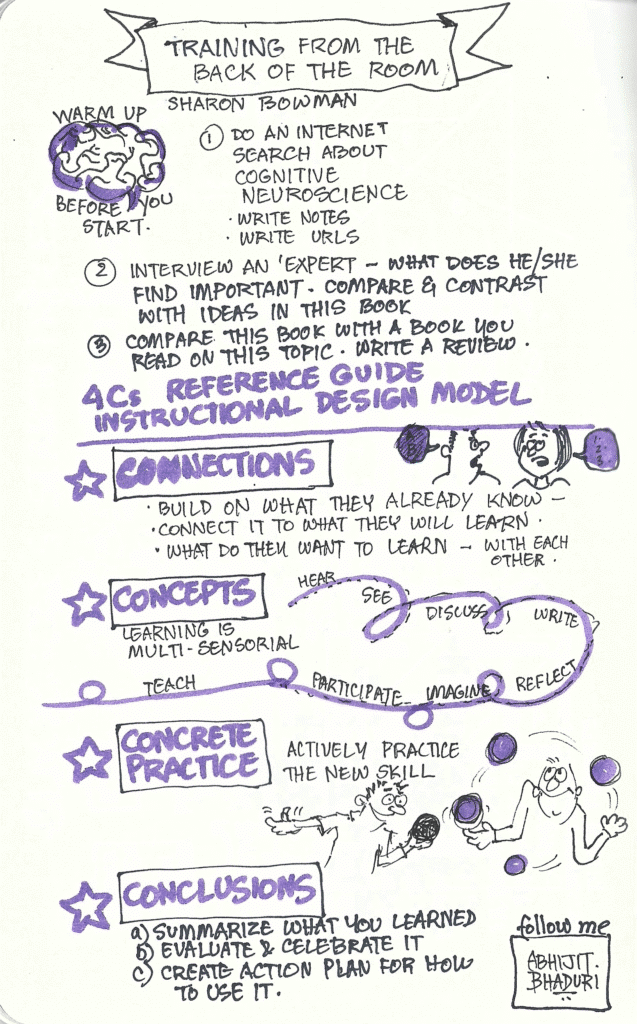
Before you read further
Can you do a quick search about cognitive neuroscience?
Write down the notes and the urls in the comments
Have a quick chat with an expert on how to make learning multisensorial. Write about your own experience of how you have learned something that you use.
Instructional Design must put the learner in the center
The 4Cs of Susan Bowman’s model are – Connections, Concepts, Concrete Practice & Conclusion
CONNECTIONS
Build on what the learner already knows or what they think they know. Then connect it to what they will learn. The learner will only learn what they want to learn. And learning is a social experience. They will learn it best with other learners. The role of the facilitator is to make these connections happen.
The book begins with a bang. It launches the reader into the heart of the process. You as a reader experience what it would feel like. In a traditional workshop, the first few minutes or even one full session is built on the speaker introducing themselves and their impressive credentials. Then to read out what is already written on the slides. The real challenge is to engage the participants. If the participants are doing 60% to 70% of the speaking about the topic then speaker is on to something.
CONCEPTS
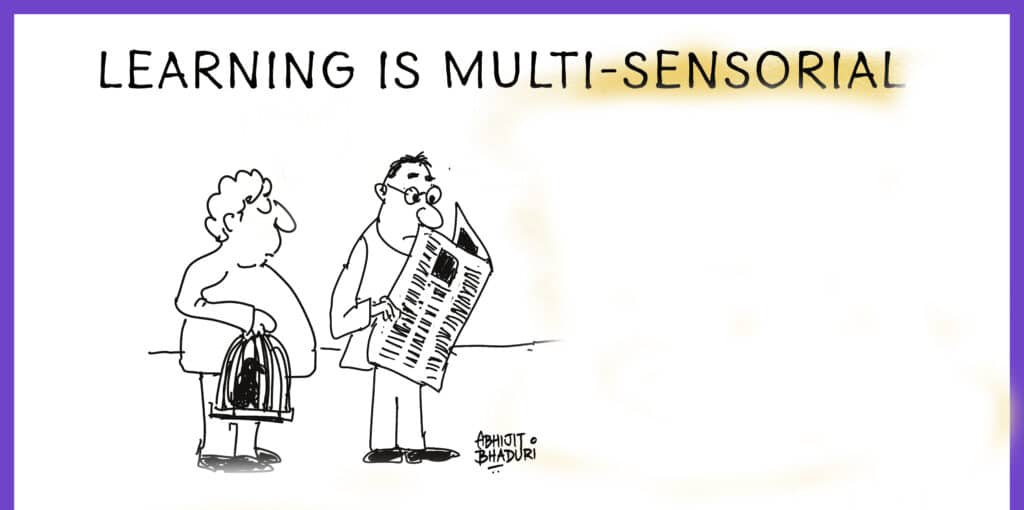
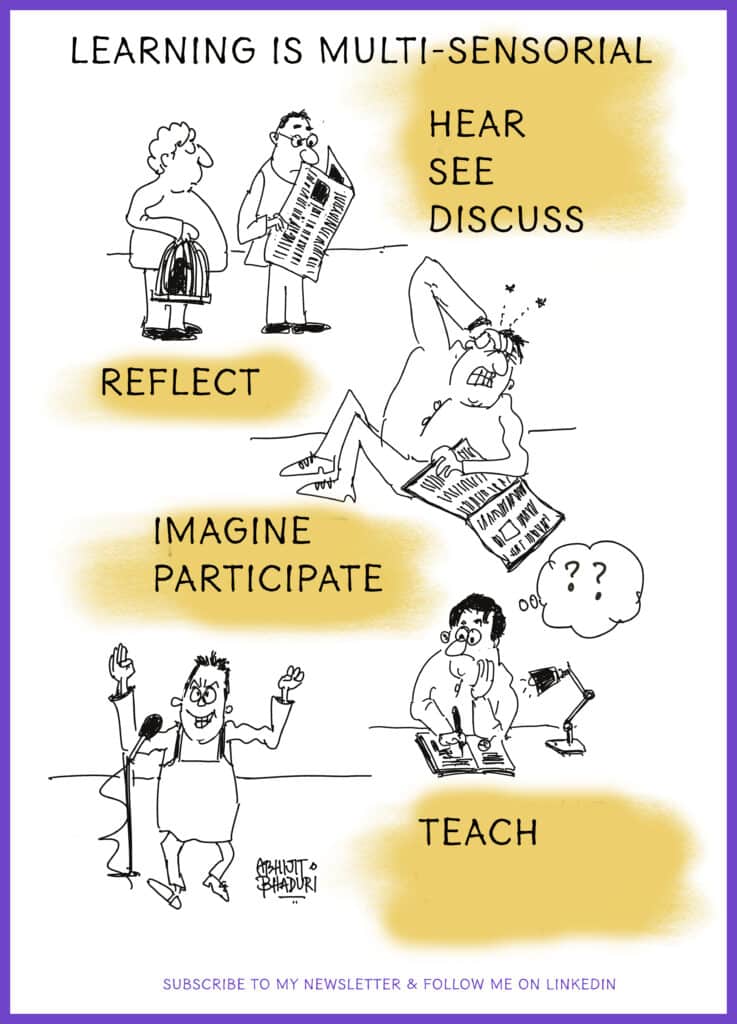
The learners must have a multi-sensorial learning experience. Some of the ways it can be done are given in the sketch
CONCRETE PRACTICE
Find opportunities to actively practice whatever you are learning. Get a feel of practicing the skill as many times as possible before a learner leaves the training venue.
CONCLUSIONS
- Summarize what you have learned. I use sketchnotes to create a visual of what I have learned. I wrote this post about how I fell in love with sketchnotes. Read it
I have a substack newsletter where I post just sketchnotes https://abhijitbhaduri.substack.com/
- Evaluate it. Celebrate what you have learned
- Create an action plan for how you will use the skill.
In conclusion
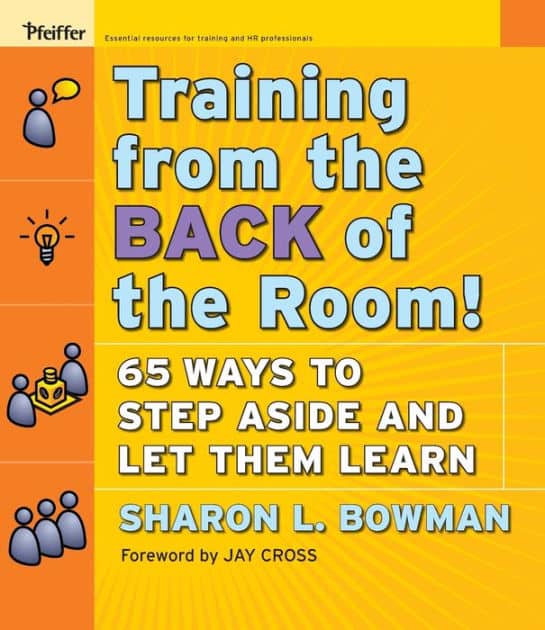
Sharon L. Bowman’s “Training from the Back of the Room” is a guide for trainers and educators who want to create engaging and effective learning experiences. The book introduces 65 strategies to actively involve learners and step away from traditional, lecture-based instruction. “Training from the Back of the Room” is a valuable resource for trainers, educators, and anyone involved in facilitating learning experiences. The book provides practical strategies and activities to create engaging and effective learning environments. Readers can learn how to design and deliver training that caters to different learning styles and preferences. The book also introduces the concept of “the 4 Cs,” a framework for designing and delivering training that involves learners at every step.
What I would do in the next edition:
The book could benefit from more detailed case studies or examples of how soft skills training is done or how to engage senior teams. how the strategies have been successfully implemented in various settings. While the book includes some visuals, incorporating more diagrams, charts, or illustrations could further enhance the presentation of information. I would have happily contributed a few of them. Expanding on how to adapt the activities for online or virtual training environments would increase the book’s relevance in today’s digital age.
By implementing the ideas presented in the book, trainers and educators can move away from traditional, lecture-based instruction and embrace learner-centered approaches. This shift can lead to more interactive, enjoyable, and effective learning environments.
What other books or resources have you found helpful in creating engaging learning experiences? Share your recommendations in the comments below!
#bookreviews #trainingfromthebackoftheroom #4Cs #activelearning #instructionaldesign #adultlearning #teachertraining #elearning #learninganddevelopment #trainingtips #SharonLBowman
2 Comments
How is this different from competency based education which finds an important mention in the National Education Policy 2020? Or for that matter from Design Think Or Tematic Teaching. The more and more I read about such concepts, I find all these concepts in effect are saying same core thing.
The book simply speaks about the diminished role of the facilitator and a large role of the learner.
Building on their current ideas by connecting it to what the other learners have (peer learning etc).
Make it multi-sensorial.