
AI has read almost everything humans have written. Everything except your lived experience. Discover why identity, not skills, is your real edge in the age of AI.
The Chatbot That Got Stumped
It was built to always have the next word ready, a machine stitched together from a trillion sentences it never lived through. But sounds confident enough to fake an answer without hesitating.
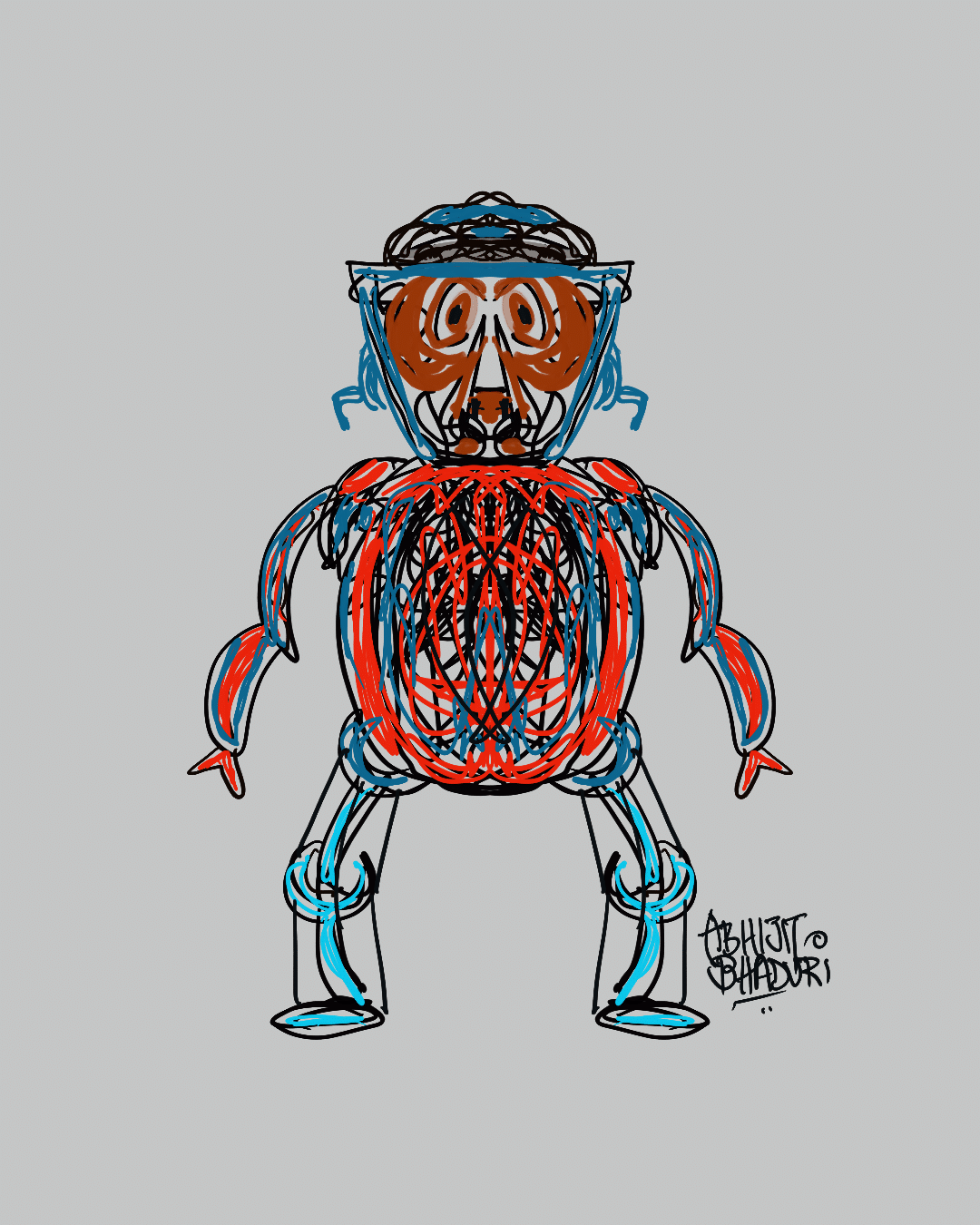
Then I asked it about a language almost no one speaks anymore, it went silent. There was no next word waiting. For a change there was no smart alec response. Its wires tangled inward, my chatbot was searching a library that simply didn’t have the book.
It just sat there, tangled and honest, admitting the one thing it wasn’t built to say: “I don’t know.” And in that knot of red and blue, it looked, for the first time, a little human.
How many languages do you NOT know
AI has read almost everything. Every book, every blog, every forum post, in over a hundred languages. Ask it about most subjects and it sounds like it’s spent a lifetime studying them.
So I asked the chatbot how many languages it knew
The bot answered, “I can read, write, and reason fluently in dozens of widely-used languages — English, Spanish, Mandarin, Hindi, French, German, Portuguese, Japanese, Arabic, Russian, Korean, Italian, and many more. “Fluent” here means I can hold a nuanced conversation, catch idioms, and write naturally, not just translate word by word. This works well because these languages have enormous amounts of text online: books, news, forums, Wikipedia, government documents.”
It is fluent in Hindi, Bengali, Tamil, Telugu, Marathi, Gujarati, Urdu, Kannada, Malayalam, Punjabi, Odia. These have large amounts of digitized text, literature, news media, and government documents.
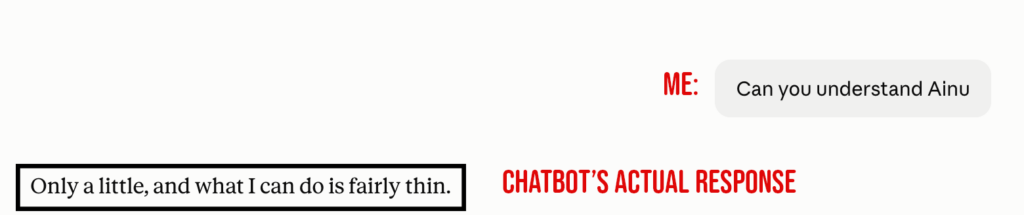
But try asking about Ainu, a language from northern Hokkaido in Japan. Barely any fluent speakers are left. Almost nothing has been written down. I asked a chatbot about it once, and it told me straight up: not enough material to learn from.
AI doesn’t feel smart because it’s magic. It feels smart because millions of people already wrote things down first. It’s not intelligent in some mysterious way. It’s just extremely well read.
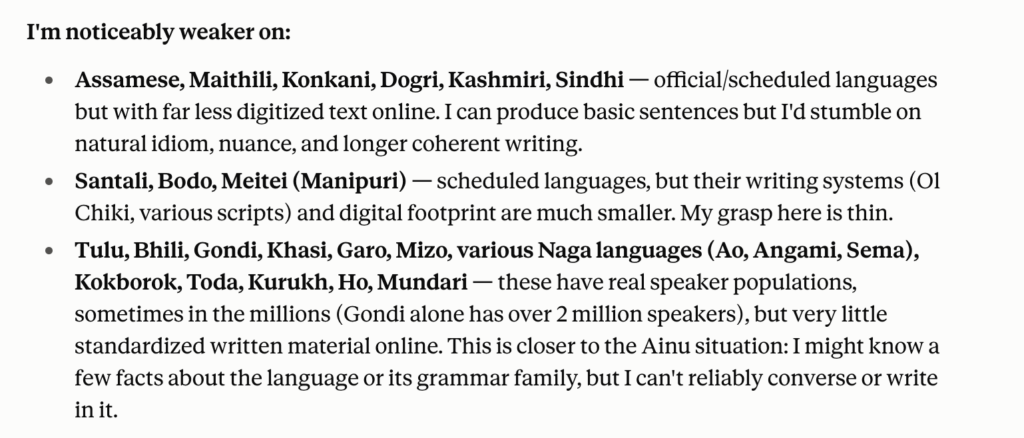
The chatbot confesses
Imagine how little AI knows about you
Nobody has written down what it’s like to be you, though. The specific way you failed at something, and what that taught you. The judgment you built over years, quietly, with nobody watching. That dataset exists in exactly one place, and it was never published anywhere. It can’t be scraped. It can’t be trained on. It doesn’t exist anywhere else to find.
For most of our careers, we were told to blend in. Sound professional. Sound like everyone else, and you’re easier to hire, easier to promote, easier to manage. That was the safe move.
It isn’t anymore. The easier you are to imitate, the easier you are to replace.
Maybe the task ahead isn’t outrunning AI. Maybe it’s finally getting comfortable being the one thing it will never be able to fully learn.
(Watch the full video above.)
