
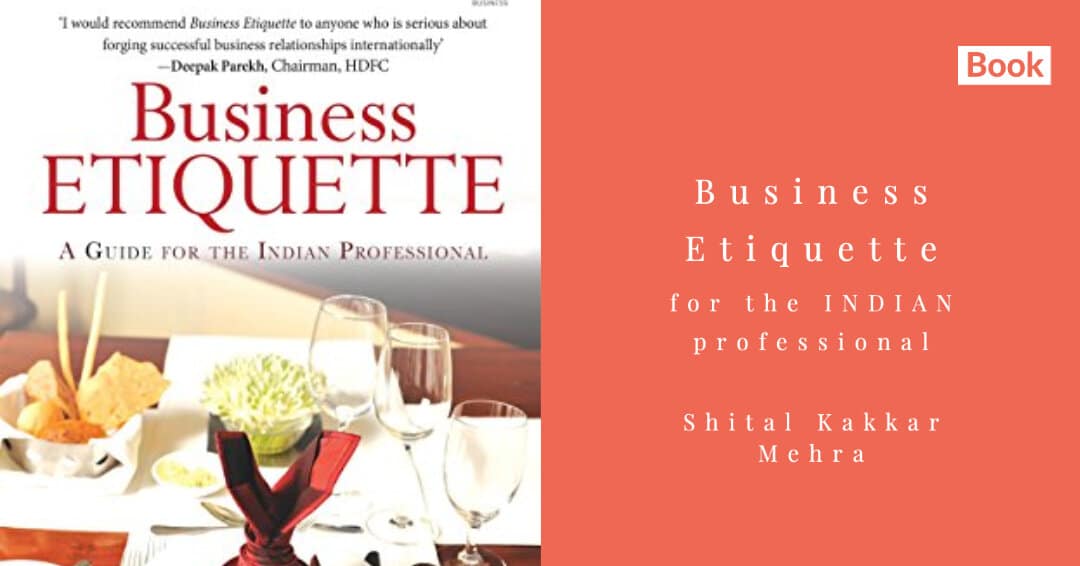
 “The economic and geographic mobility recently achieved by our elites and professional classes has been so rapid and high-profile as to be awe-inspiring. The movement of professionals and other wage-workers to richer countries spawned the extraordinary socio-economic phenomenon of the NRI, shorthand for a diverse group that has achieved a remarkably powerful political voice even within India.”The Indian employee is a familiar sight across the world. From jobs in the Hotels, Restaurants, Airports to IT, it is not hard to find the rich range of skills they bring. Etiquette is a tricky subject. There are rules for everything. What works in one country is taboo in another. Burping after a meal is considered impolite in some countries while in others the host feels unappreciated if you do not visibly and audibly burp and announce how much you loved the food.When someone gifts you something, should you tuck it away somewhere and open it after the guest leaves or should you rip open the wrapping and express your astonishment and joy and coyly say to your guest that they shouldn’t have done it… but you LOVE it.Shital Kakkar Mehra has brought out a very well written book called Business Etiquette for the Indian Professional. I loved the book. The chapterization is very well thought through. There is stuff on basic hygiene (eg Use a deo, groom yourself well kind of stuff). Then there is stuff on office etiquette – how to behave with your colleagues in formal and informal situations. For instance when you are invited for a meal with a colleague or your boss the focus is on meeting – not eating. So eat something before you go for a business meal to let the food not distract the conversation. There are etiquette tips on how to behave in public places. For eg: Speak softly into the mobile and keep a distance of six feet between you and others. When the flight lands, do not whip out your phone instantly and start doing a live broadcast of how you have just landed and that you are still inside the plane etc.Etiquette is about not offending the sensibilities of others. Making space and respecting the norms of other cultures who may have different standards from the ones we are used to.I liked the book. It is well written. Shital Kakkar Mehra is one of the most experienced practitioners of corporate etiquette and international protocol in India today, having trained over three thousand executives, focusing on the specific requirements of the global Indian. She has been doing a column on etiquette for The Economic Times newspaper. The latest column is about knowing the client’s culture. Perception of time is different in different parts of the world.
“It’s extremely important for a westerner to be ‘on time’ while people in the Middle-East & South Asia are comfortable being ‘in time’, a relaxed 5-10 minute window. , Westerners view their work day as one composed of 30-minute slots while Easterners, with the exception of Japan, have a holistic approach towards time.Westerners like to schedule multiple business meetings during their work day, viewing these as transactional in nature. Asians prefer fewer but longer meetings, using them ‘to know’ their business partners as building trust is extremely important, especially in the initial rounds of discussions and negotiations.”
The book is divided into Business Communication Skills, Civility in the Workplace, Business Dressing, Networking, Dining & Social Skills. Each section ends with a FAQ.Upto a certain level in the corporate food chain, our technical skills help us grow. Beyond that it is entirely the soft skills that define success. In a global world even more so. One section I would like to see added to the future editions of the book would be on how to ask precise questions. I always notice how verbose people can be while asking a question that can be asked in less than ten words. Sometimes the questions take longer than answers. A section like that could work wonders to improve communication skills of Indian professionals. Even without that section the book is really well crafted.So I would highly recommend that you read the book. I loved it.Just one thing jarred… and I must say that. The drawings used to illustrate the book are amateurish. To paraphrase Shital, ‘it is like you are wearing an expensive suit and carrying a plastic pen from a hotel or an airline. It is tacky.’****************Must Read Outlook Magazines Special Report on Mobility<click here>Buy the book Business Etiquette for the Indian Professional <click here>
2 Comments
Nice post loved your examples. The one about burping aftr a meal and after landing people using cellphones.the millennium schools
Nice…. use full for everyone who works in corporate… thank for sharing…